How Choreographers Translate Movement for the Camera
Screen choreography must work for performers, lenses, edits and the emotional rhythm of a story.
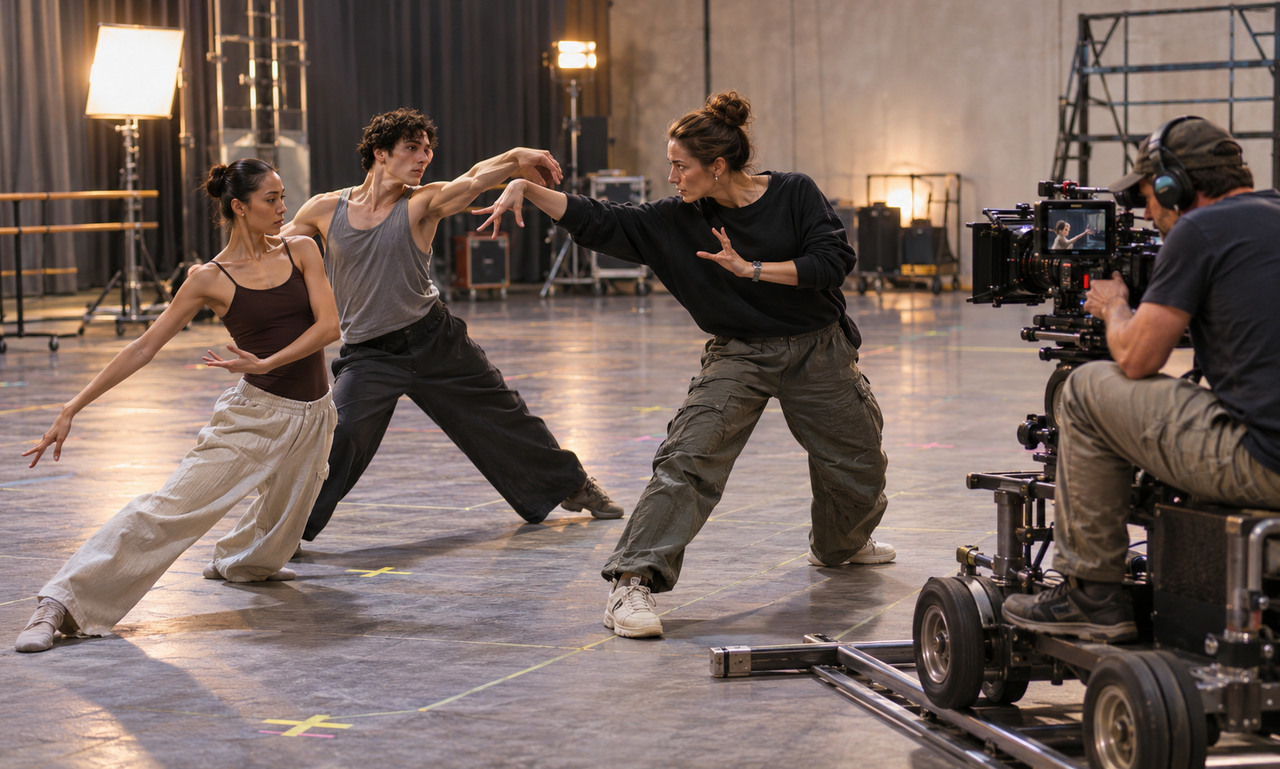
Movement changes when it enters a camera frame. A step that fills a theatre may disappear in a close shot, while a small turn of the wrist can become the centre of a scene. Screen choreographers shape movement for performers and for the lens that will carry it to the audience.
The work begins with story. Dance can reveal confidence, conflict, attraction or control. Its purpose determines whether the camera should observe from a distance or move inside the action.
The frame changes scale
Wide shots show patterns, spacing and the relationship between bodies. Medium shots bring rhythm closer. Close-ups capture breath, effort and detail. A choreographer plans phrases that remain clear as the production moves between these scales.
Camera movement adds another layer. A dolly can travel with a dancer, a handheld camera can create urgency and a locked frame can make motion feel more graphic. The best results come when the performer and operator rehearse as one unit.
Editing creates a second rhythm
Screen movement rarely appears in one continuous view. Editors may combine several takes and angles. Choreography needs strong visual landmarks so a gesture can continue smoothly across a cut.
Musical timing is only part of the structure. A cut may land on a look, a change in direction or a moment of stillness. These points give the editor options without breaking the emotional flow.
Performance remains the centre
Technical planning should never flatten the dancer’s presence. Choreographers leave room for weight, personality and response. Two performers can execute the same phrase and communicate different histories.
Great screen choreography makes camera, movement and editing feel inseparable. The viewer does not see a set of production problems. It sees a body telling a story in exactly the space the frame provides.


