How Costume Aging Makes New Clothes Feel Lived In
Dye, abrasion, repairs and careful wear patterns give costumes the history a character needs.
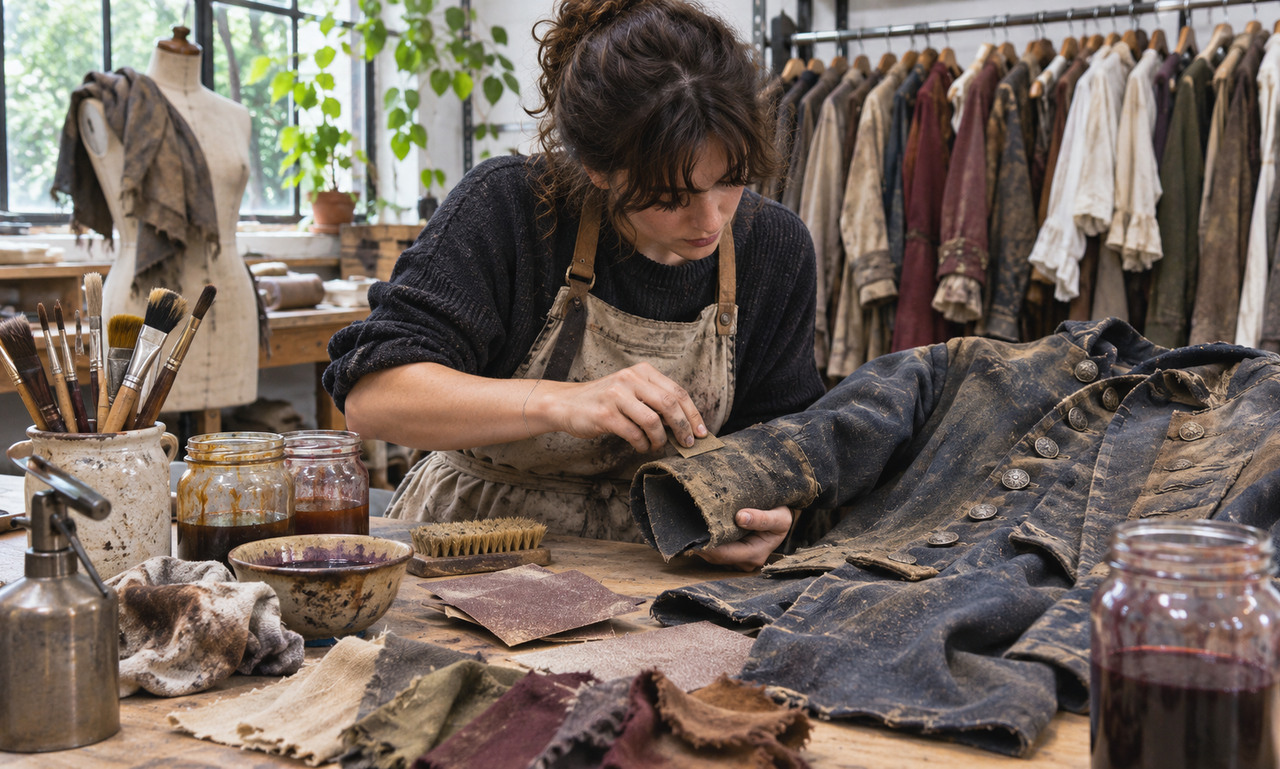
A new garment can look wrong on screen even when its cut is historically accurate. Real clothes carry evidence of movement, weather, work and care. Costume aging adds that history before the performer steps onto the set.
The process is not random damage. Every faded seam, repair and stain should belong to the character and the world of the story.
Wear follows the body
Clothes do not age evenly. Cuffs, collars, knees, pockets and hems receive different kinds of friction. A costume artist studies how the character moves and what the garment is made from before deciding where to soften or abrade it.
Repeated washing, sanding and controlled distressing can break the stiffness of new fabric. Dye may lower a color that looks too clean under production lighting.
Story determines the marks
A mechanic, musician and office worker will leave different traces on the same jacket. Climate, income and personal habits matter too. A careful character may repair a tear immediately, while another may wear it open for years.
These details give performers useful information. A worn pocket suggests where the character keeps a familiar object. A polished elbow reveals a repeated posture.
Continuity keeps the history believable
Productions often need duplicate costumes for stunts, weather effects or long schedules. Each version must carry matching wear. Teams document colors, stains and damage so the garment remains consistent across takes.
Costume aging is most effective when viewers never stop to admire the technique. They simply believe that the clothes existed before the scene began and will continue after it ends.


