How Cue Card Teams Keep Live Television Moving
Cue-card teams turn a changing script into clear, well-timed guidance that keeps hosts and performers connected to the live moment.
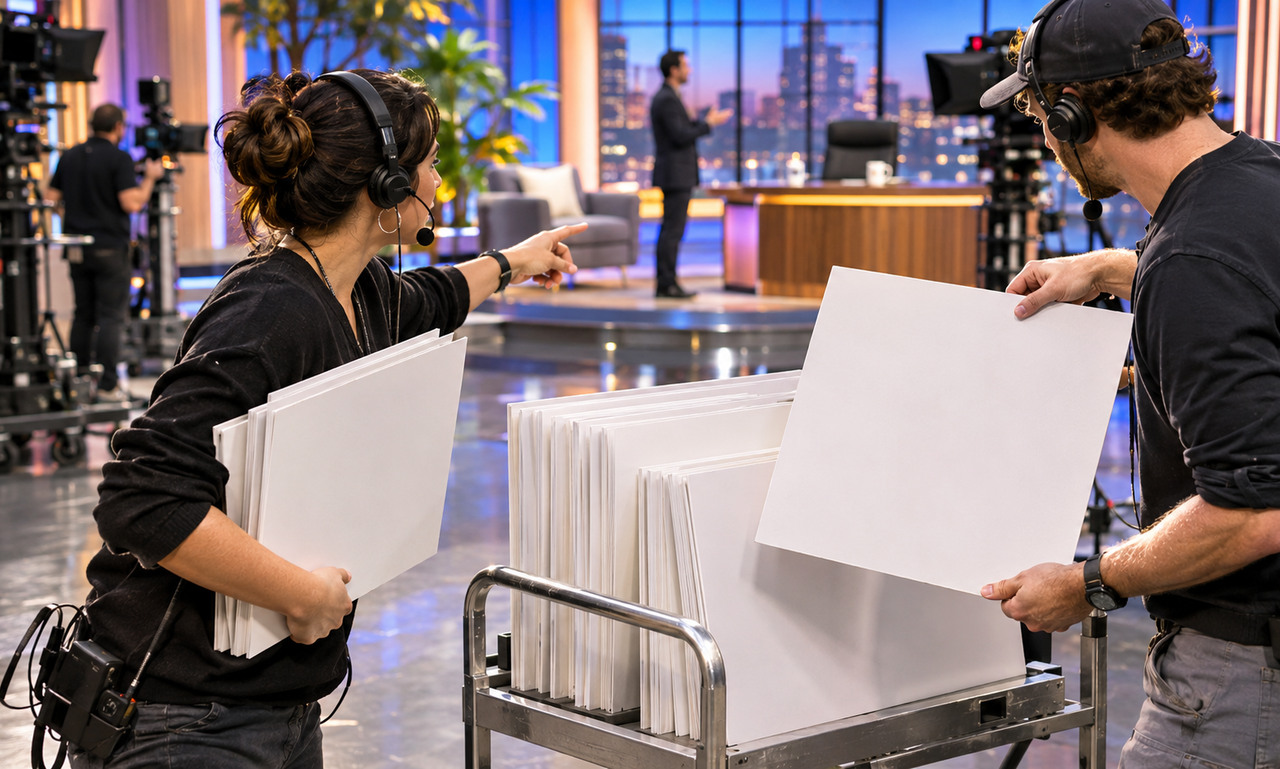
Live television depends on language arriving at the right moment. A host may be moving between cameras, responding to a guest and listening for a director, while still needing the next introduction or carefully worded line. Cue-card teams make that information visible without breaking the performance.
The cards are simple by design, but their preparation is exact. Letter size, line breaks and spacing must remain readable at a distance, and the language has to match the latest approved script.
Layout follows the performer’s rhythm
A card cannot hold too much information. Sentences are divided where a natural breath or pause should occur, allowing the reader to keep eye contact near the camera rather than search through a dense block.
Names, numbers and unfamiliar words receive special attention. The team may mark emphasis or pronunciation in a way the performer understands instantly, without turning the card into a distraction.
Changes continue until airtime
Monologues, introductions and timing can shift during rehearsal. Cue-card teams replace lines quickly, keep versions in order and confirm that every update has reached the studio floor.
During the show, the operator watches the performer rather than moving cards at a fixed pace. A laugh may extend a pause, an improvised remark may skip a line and a camera change may require a new position.
The support should remain invisible
Good cueing allows the host to sound present rather than recited. The operator holds cards at a consistent height, changes them cleanly and anticipates where the performer will look next.
Viewers rarely notice the system, which is part of its success. Behind an apparently effortless transition is a team translating a live script into visual timing, one readable moment at a time.


