How Dialogue Editors Make Screen Speech Feel Natural
Invisible sound work turns production recordings, alternate takes and room tone into conversation that feels continuous and alive.
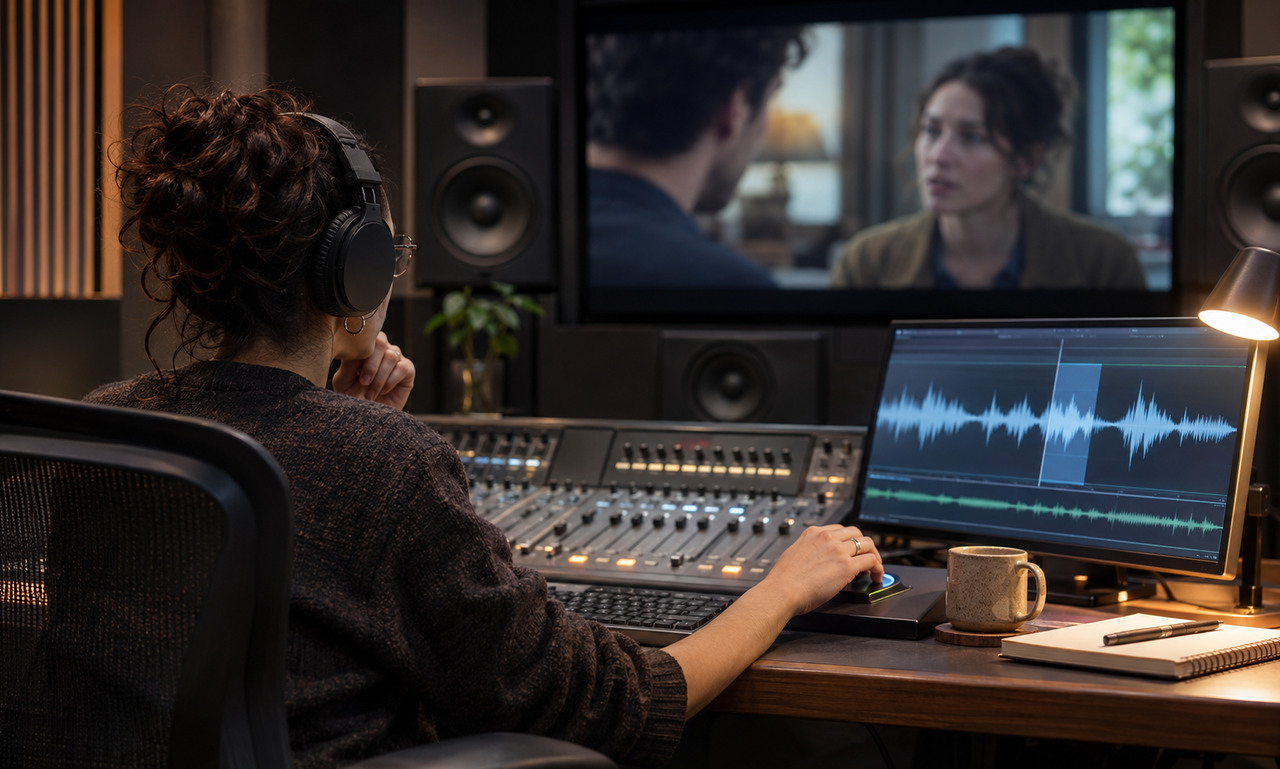
Screen dialogue feels immediate when the audience never has to think about how it was recorded. Yet a single conversation may combine lines captured on different days, microphones placed at different distances and locations with entirely different background sound.
The dialogue editor shapes those pieces into one believable exchange. The goal is not sterile perfection. It is clarity with enough texture to keep the scene grounded in its environment.
Performance remains the priority
Editors listen first for intention, timing and breath. A technically clean line is not always the best line if another take carries a more truthful hesitation or sharper reaction. Sound choices have to support the performance already built in the edit.
When replacing a damaged word or syllable, the editor searches alternate takes for a match in pace, pitch and emotional energy. Even a perfect verbal match can feel wrong if the actor’s breath or intensity belongs to another moment.
Continuity lives between the words
Every location has a sonic signature: ventilation, traffic, distant voices or the soft stillness of an interior. Editors use room tone to bridge cuts so that the background does not jump whenever the camera angle changes.
They also manage perspective. A close shot usually supports a more intimate sound than a wide one. Subtle shifts help the audience accept the camera’s movement through space without drawing attention to the technique.
Clean does not mean lifeless
Noise reduction can rescue difficult recordings, but too much processing removes the natural edge of a voice. Mouth sounds, clothing movement and breaths are judged one by one. Some distract; others make speech feel embodied.
The finished track should let the viewer follow every important word while still believing the actors occupy the room on screen. Dialogue editing succeeds through that balance: meticulous construction disguised as ordinary human conversation.


