How Documentary Interviewers Build Trust on Camera
The strongest interviews grow from preparation, patience and respect for the person behind the testimony.
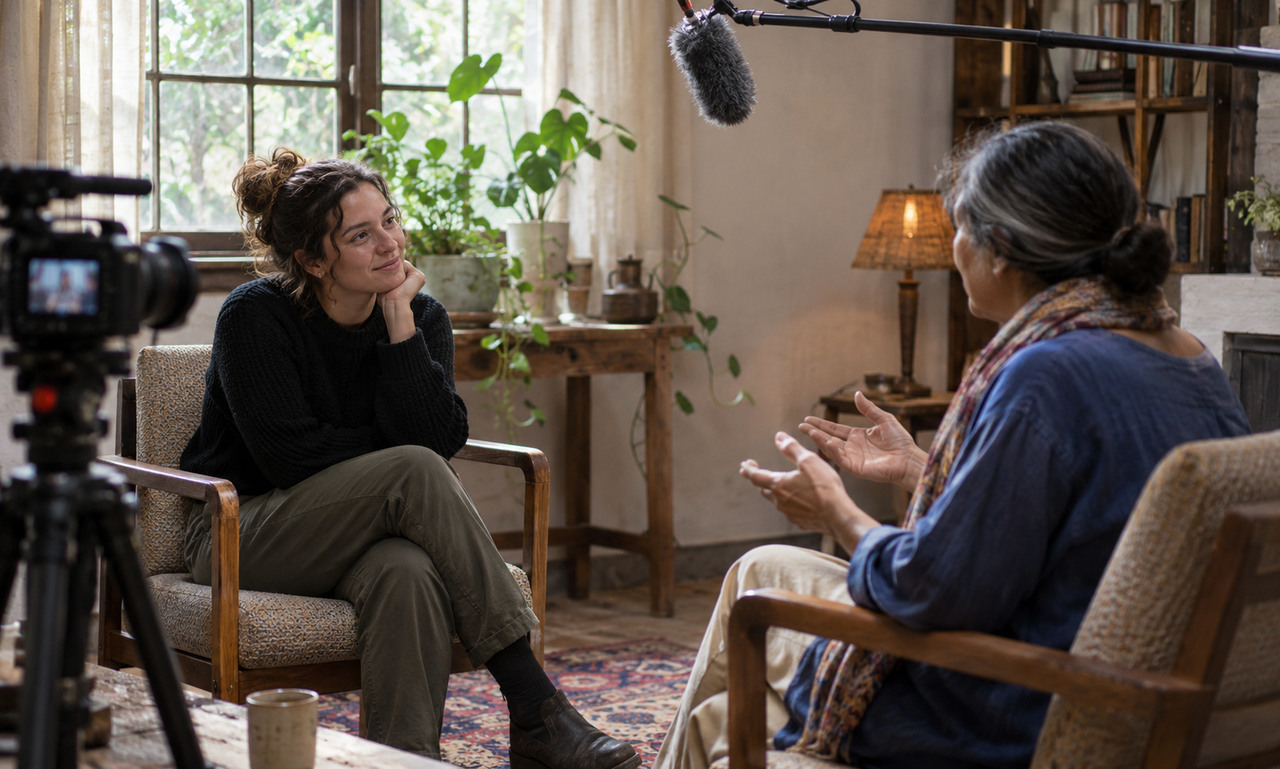
A documentary interview can hold memory, evidence and emotion in the same frame. Reaching that depth requires more than a strong list of questions. The subject must understand the process and feel that the person across from them is listening.
Trust does not guarantee agreement or remove difficult topics. It creates the conditions for an honest exchange.
Preparation shows respect
Research prevents the interviewer from asking the subject to rebuild basic context. It also reveals gaps, contradictions and details worth exploring. Preparation makes room for better follow-up questions.
The production should explain where the interview may appear, how it will be used and what the filming setup involves. Clear expectations matter, especially when the story includes trauma or personal risk.
Listening changes the conversation
A fixed questionnaire can miss the most important moment. Interviewers watch language, pauses and changes in energy, then follow what emerges. Silence can give a subject time to find a more exact answer.
Body language matters too. Eye contact and calm attention help the equipment fade into the background. The conversation should not feel like a performance for the crew.
Editing carries an ethical responsibility
Trust continues after filming. Editors shape hours of conversation into minutes, so context can be lost through selection. A powerful quote should not be separated from the meaning that made it true.
The strongest documentary interviews preserve the subject’s complexity. They invite honesty without treating vulnerability as material to be taken, allowing the camera to record a voice rather than reduce it.


