How Fashion Archivists Preserve Iconic Garments
Careful handling, documentation and storage allow fragile stage and red-carpet pieces to survive beyond a single celebrated appearance.
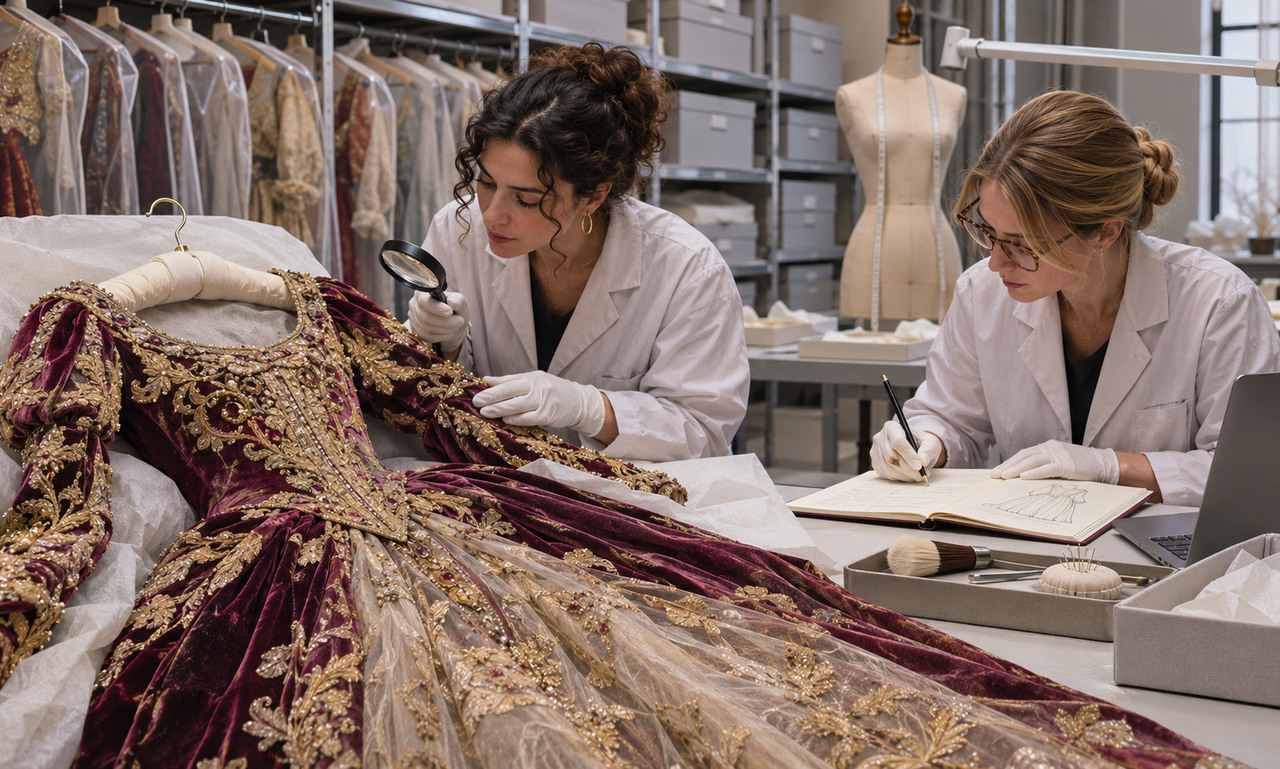
An iconic garment can enter cultural memory in a matter of minutes, but preserving it requires years of quiet care. Fabric, adhesives, beads and metal components all age differently, and the stresses of performance or travel remain inside the object.
Fashion archivists treat the piece as both clothing and evidence. Their work protects its appearance while recording construction, alterations and signs of use that help tell its full story.
Documentation begins before storage
Every garment is photographed and measured, with notes on materials, condition and provenance. Loose threads, missing embellishments and earlier repairs are recorded so future changes can be recognized.
Context belongs in the archive too. Fitting notes, sketches, photographs and information about the appearance connect the object to the person and moment that gave it significance.
Support prevents slow damage
Heavy or fragile garments may rest flat in acid-free boxes, while others require padded hangers or custom forms that distribute weight. Tissue and protective covers reduce creasing, abrasion and exposure to dust.
Light, temperature and humidity are controlled because damage can be cumulative and irreversible. Even a stable garment needs regular inspection as fibres, dyes and decorative materials respond over time.
Every new appearance has a cost
Loans for exhibitions or future wear are assessed carefully. Archivists plan packing, transport, mounting and handling so the piece can be seen without compromising its long-term survival.
Preservation does not freeze fashion outside of life. It creates the conditions for garments to be studied, exhibited and remembered, keeping the craftsmanship and cultural meaning accessible to another generation.


