How Foley Gives Screen Stories a Body
Footsteps, fabric and handled objects make screen movement feel physical and present.
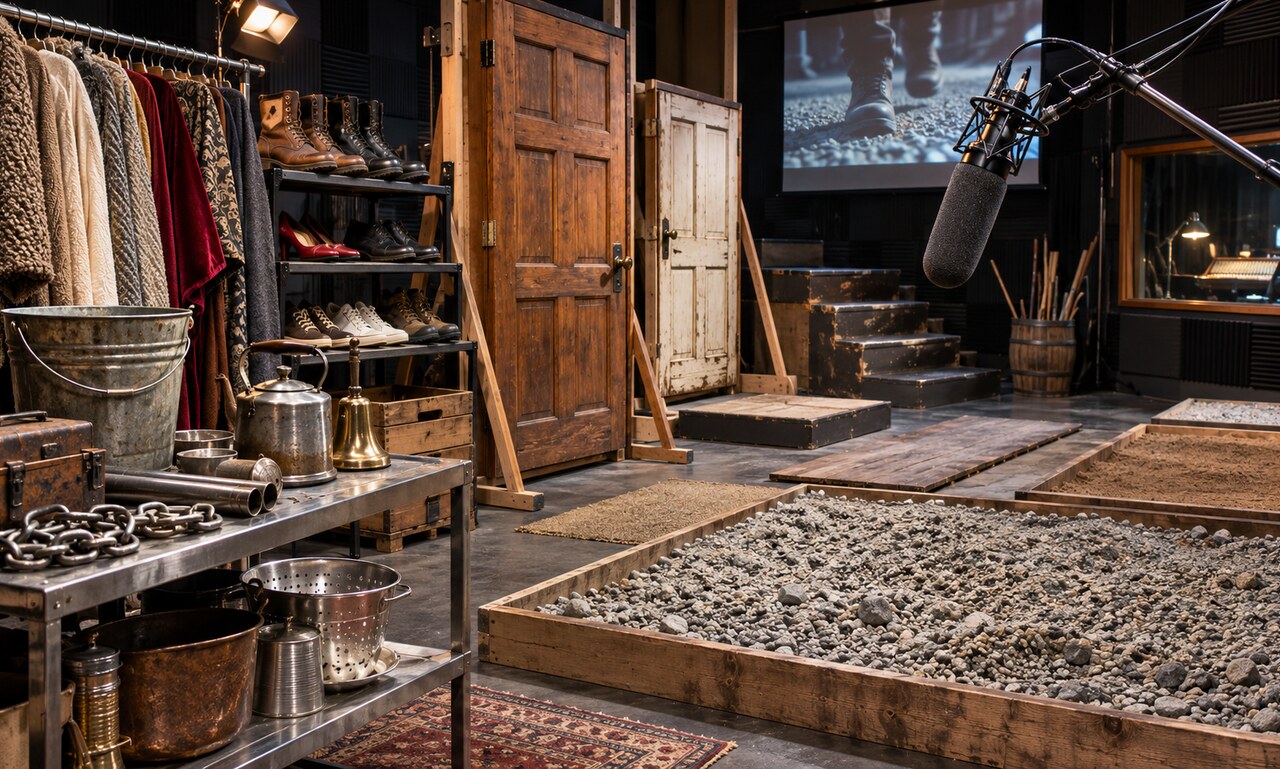
A character crosses a room, lifts a coat and places a glass on a table. The camera records the actions, but many of the sounds audiences hear are created later. Foley artists perform those details in synchronization with the finished image.
The work is easy to overlook because it is designed to feel natural. Yet without it, movement can seem weightless and environments can lose their physical presence.
Footsteps reveal more than movement
A footstep carries information about surface, footwear, pace and emotion. The same character sounds different when running across gravel, hesitating on wood or walking confidently through a hallway.
Foley stages contain sections of common surfaces so artists can match the scene. Performance matters as much as the material. Timing and pressure must reflect the body on screen.
Objects develop character
Clothing rustles, bags shift and tools make contact with the world. These sounds help define texture and scale. A heavy object should not sound light, and a fragile object should carry the possibility of breaking.
Sometimes the most convincing sound comes from an unexpected object. The goal is not literal accuracy but a sound that supports what the audience sees and feels.
Sound completes the illusion
Foley is combined with production audio, ambience, effects and music. Each layer must leave room for the others. A sound can be realistic on its own and still be wrong for the emotional focus of the scene.
By giving movement texture, Foley connects the image to the body. It helps a screen world feel touched, carried and lived in.


