How Live Broadcast Directors Choose Camera Shots in Real Time
Live broadcast directors turn many simultaneous camera feeds into one clear visual story without the safety of an edit later.
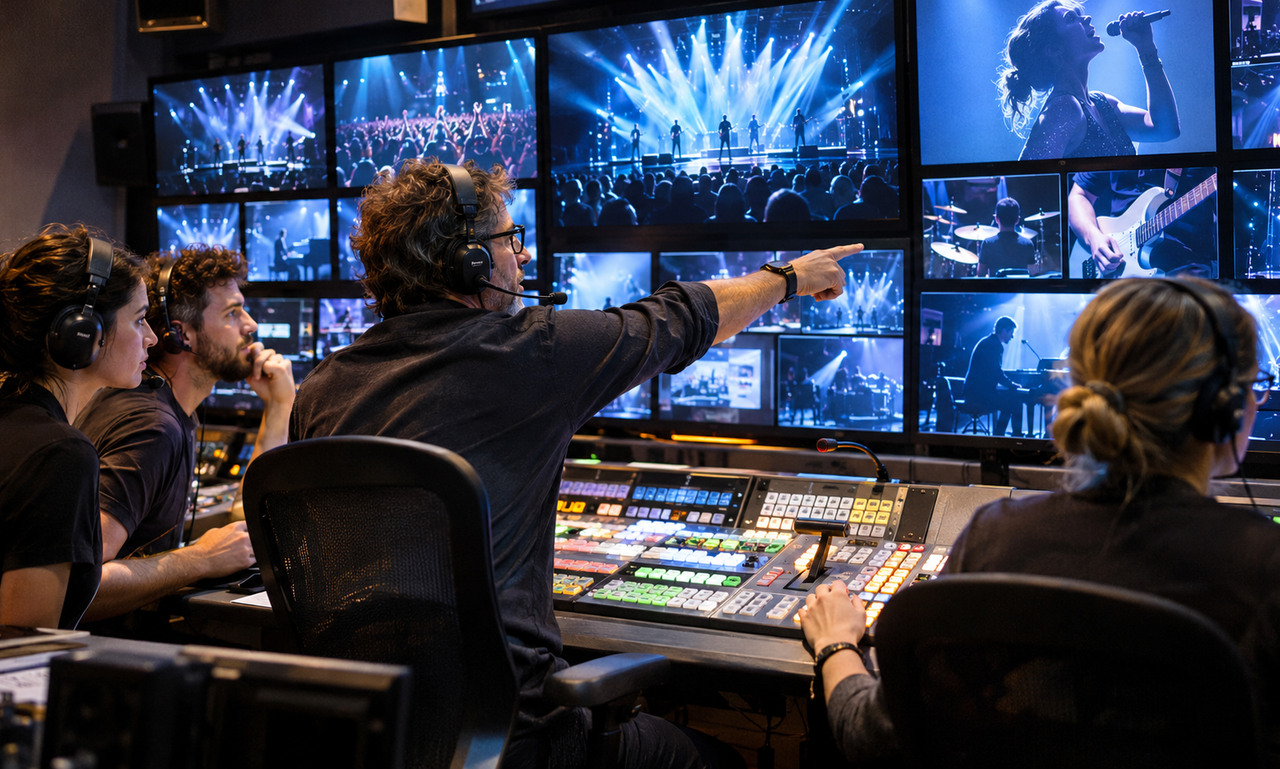
A live performance may be covered by cameras at the stage, in the audience, on cranes and behind instruments. Viewers receive only one image at a time. The broadcast director chooses that image while the event continues, creating an edit that cannot be revised after the moment passes.
Preparation begins with the running order, blocking and musical structure. Directors assign cameras useful responsibilities and discuss the moments that need guaranteed coverage, from an entrance to a solo or a winner’s reaction.
Every cut needs a reason
A close-up can reveal emotion, while a wide shot restores scale and geography. Cutting simply because another angle is available creates visual restlessness; changing shots when attention shifts keeps the viewer oriented.
Directors also listen for rhythm. Music, applause and speech shape the pace, but the image should not chase every beat. Holding a strong frame can create more impact than rapid cutting.
Communication makes anticipation possible
Camera operators hear advance instructions so they can compose the next shot before it is selected. A clear call identifies the subject, frame size and likely timing without interrupting the operator’s concentration.
The technical director executes the switch, while producers, graphics and replay teams share information about changes. The control room functions through concise language and trust in specialized roles.
The plan must respond to surprise
Live events produce unscripted reactions, delays and movement. The director keeps safe coverage available while recognizing the spontaneous image that may become the moment audiences remember.
The result feels immediate because judgment happens at the same speed as the event. Many feeds become one point of view, shaped through preparation, listening and the ability to decide before the moment disappears.


