How Production Design Makes Imaginary Worlds Believable
Sets, objects, colour and architecture quietly establish the rules of a screen world.
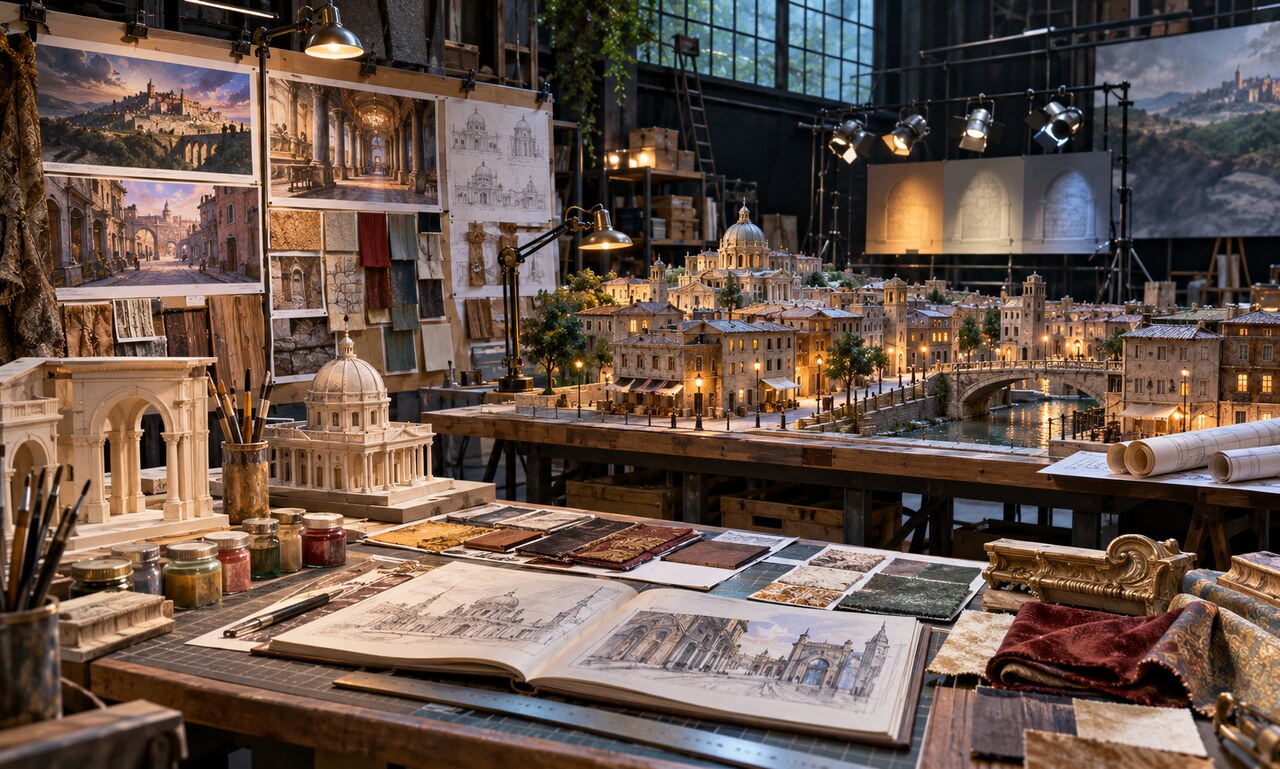
An imaginary world becomes convincing when it appears to exist beyond the edges of the frame. A room needs a history. A street needs a logic. Objects must seem chosen, used and placed by people whose lives began before the scene opened.
Production design creates that continuity. It translates the themes of a script into locations, sets, colours and objects that actors can inhabit and audiences can understand.
Every space reveals character
A bedroom can show what someone values, hides or cannot afford. An office can communicate hierarchy before a manager speaks. The shape of a doorway, the condition of a wall and the distance between furniture all influence how characters appear within a space.
Designers build these environments through research and interpretation. Even a futuristic world needs recognizable systems: where people eat, how they travel and what materials their society can produce.
Details suggest life beyond the scene
A convincing set contains evidence of use. Floors show wear where people walk. Shelves hold objects that belong together. Public spaces carry signs of maintenance, neglect or change. These details do not need to become plot points; their purpose is to make the environment feel continuous.
Colour and texture help connect locations across a story. A repeated material can unite distant places, while a sharp shift can signal that a character has entered a different social or emotional world.
Design works with the camera
Production design is created for a particular frame. Scale, colour and detail must work with lighting, lenses and movement. A miniature, a built set and a real location may all contribute to the same place on screen.
When the collaboration succeeds, the audience stops thinking about construction. The world feels discovered rather than assembled. That illusion is the result of hundreds of deliberate physical choices.


