How Production Stills Shape the Memory of a Film
A single photograph can outlive a trailer, capture a performance’s atmosphere and become the enduring public image of a film.
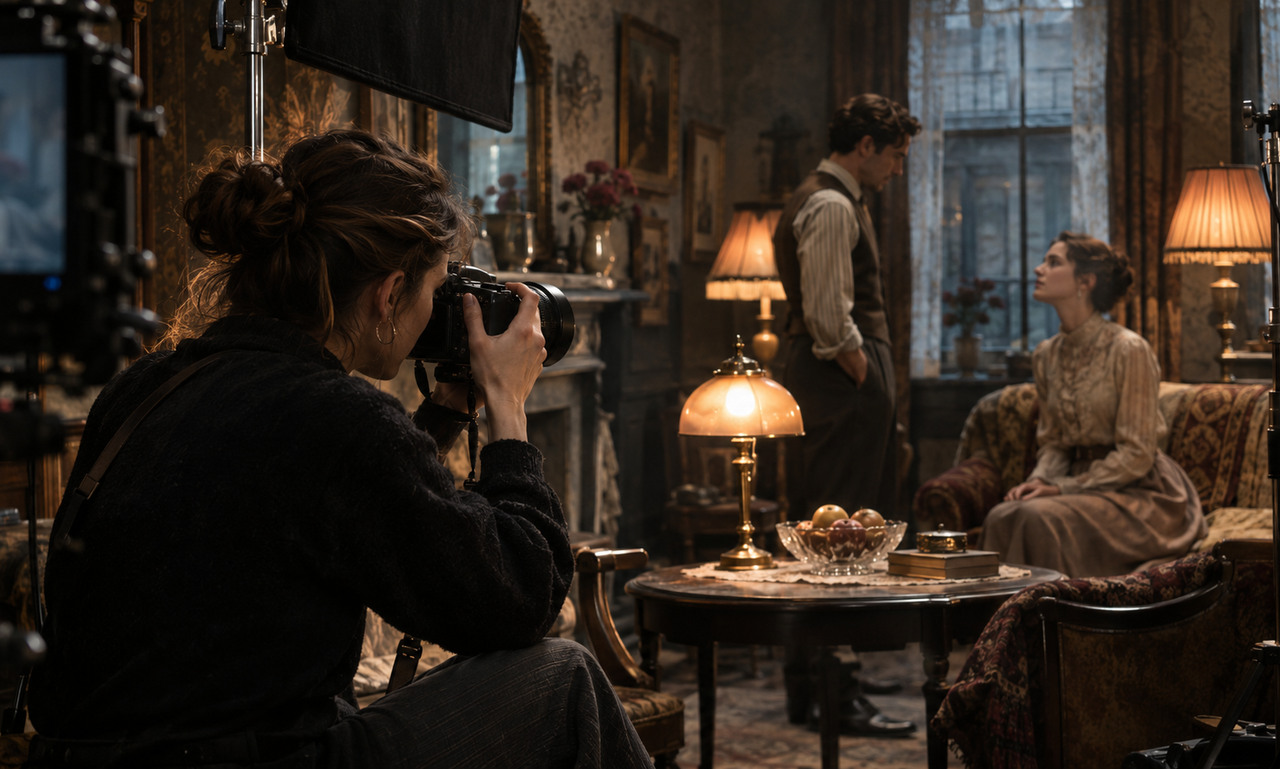
Long after a film leaves cinemas, its identity may survive in a handful of photographs. A glance between actors, a carefully lit room or a figure held against a vast landscape can become the image audiences use to remember the entire work.
Unit still photographers create those frames while a production is moving at full speed. Their task is to capture the film’s visual and emotional character without interrupting the performances or the motion-picture camera.
The photographer works inside the scene
Still photographers study rehearsals, lighting and blocking to anticipate the fraction of a second that will carry the most meaning. They position themselves close enough to find the image while remaining outside camera lines and the actors’ concentration.
Silence is essential. Quiet camera systems and careful movement allow the photographer to work during takes. The craft depends on observation, patience and an understanding of how a scene builds toward its decisive beat.
A still has different demands
A moving sequence can reveal information over time, but one photograph must communicate instantly. The strongest frame clarifies relationships, atmosphere and scale without relying on the moments that come before or after it.
Not every useful image is taken during a live scene. Cast portraits, costume details and behind-the-scenes photographs expand the visual record, giving publicity teams and future historians a fuller sense of how the film was made.
The image begins a second life
Editors select stills for posters, reviews, festival catalogues and streaming menus. Each context changes how the film is introduced. A quiet character image may promise intimacy, while a wide composition can foreground spectacle or place.
Over time, one frame often separates from its original campaign and becomes part of cinema’s shared visual memory. The still photographer preserves more than evidence of production; they create the image through which a film may continue to be seen.


