How Scenic Painters Give Film Worlds Their Final Texture
Scenic painters turn newly built surfaces into believable places through color, scale, age and layers of carefully controlled imperfection.
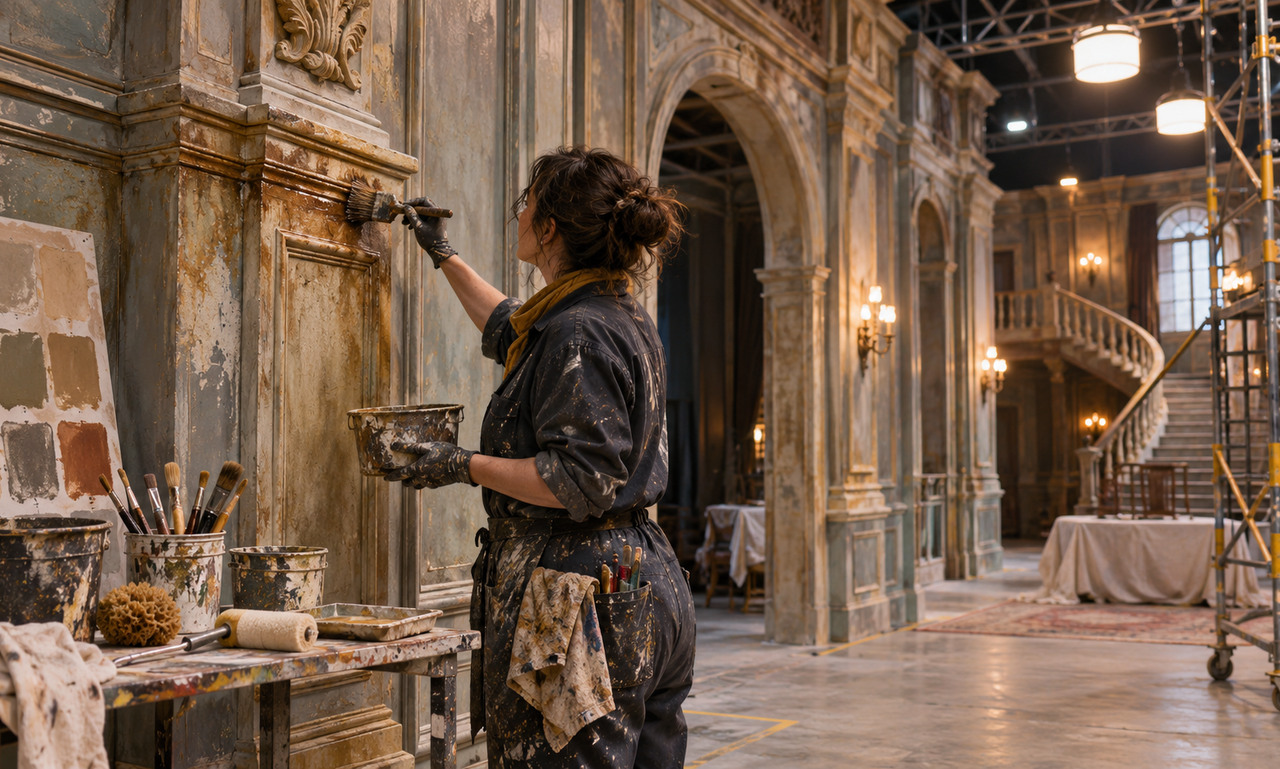
A set may be built from fresh timber, foam and plaster, but the story may require a marble hall, a smoke-darkened club or a house that has absorbed decades of weather. Scenic painters create that transformation through layers designed specifically for the camera.
The work begins with research and samples. The production designer establishes the world, while scenic artists test color, finish and texture under the lighting conditions that will shape the final image.
Material can be suggested through paint
Wood grain, stone, metal and aged plaster each have a visual logic. Painters study how color changes across the surface, where light catches and how wear gathers around edges, handles and points of contact.
Scale changes the method. A broad wall may need large, irregular movement so it does not read as a flat wash, while a close detail rewards fine cracks, stains and shifts in sheen.
Imperfection makes construction believable
New surfaces are often too even for the story. Glazes, scumbles, washes and dry brushing introduce variation without making every mark equally visible. The goal is controlled history rather than random damage.
Aging also follows imagined use. A stair rail is polished where hands touch it, moisture collects near a window and dust settles in recesses. Those patterns make the surface feel connected to human behavior.
The camera completes the illusion
Colors that look subtle in person can become stronger under a lens, and reflective finishes may reveal unwanted hotspots. Scenic teams adjust after camera and lighting tests so the material holds together from the intended distance.
When the work succeeds, audiences accept the space without questioning how it was built. Paint becomes architecture, age and atmosphere, giving the story a world that seems to have existed long before filming began.


