How Session Musicians Shape the Records We Know
The players behind the lead artist often turn a strong composition into the recording listeners carry with them.
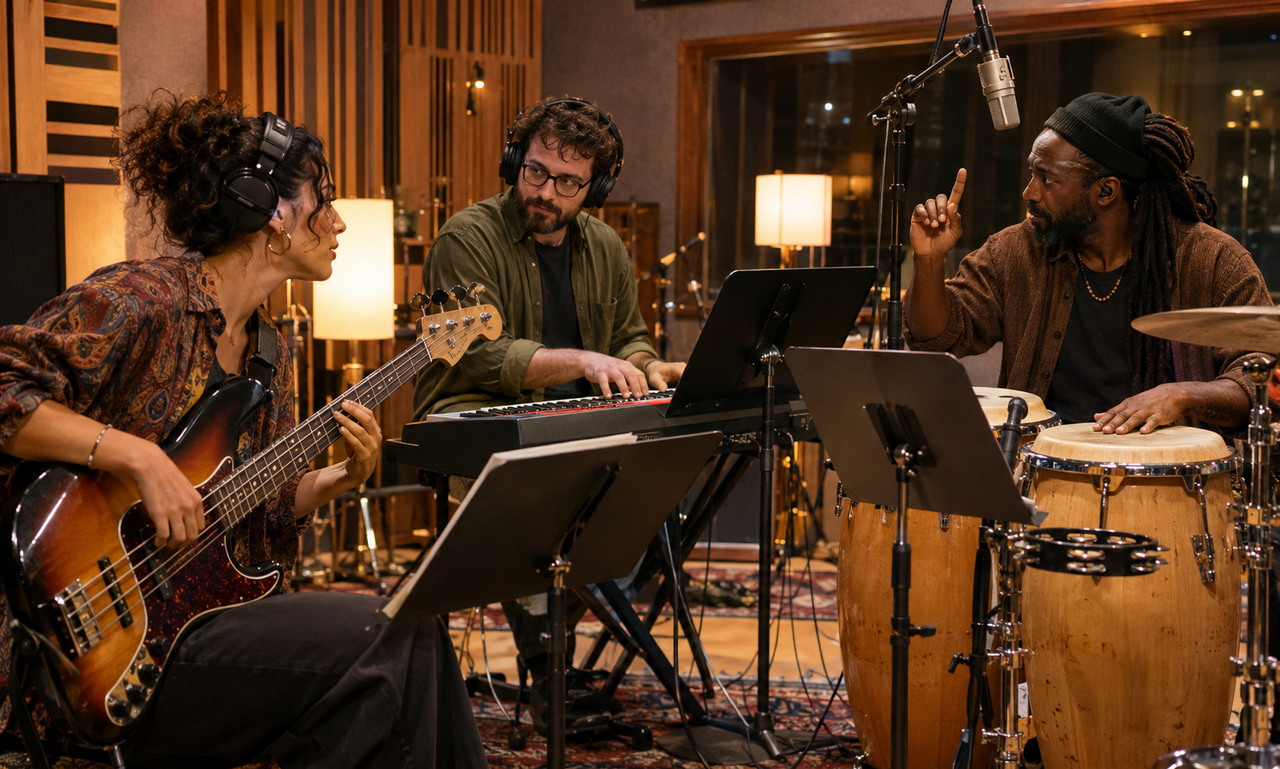
Many familiar records depend on musicians whose names never appear on the cover. Session players enter the studio ready to understand a song quickly, support the artist and make choices that survive repeated listening.
Their value is not limited to technical skill. They know how to hear what a song is becoming and contribute without crowding its centre.
Interpretation begins with listening
A chord chart may explain harmony, but it does not define touch, tone or space. A bassist decides how long a note should ring. A drummer chooses whether to push the beat or sit behind it. A keyboard player may find one sound that holds the arrangement together.
These decisions often happen in real time. Strong session musicians listen to the vocal, the room and one another before showing what they can play.
Versatility serves the artist
Studio players move between styles, tempos and production methods. That range helps them understand references without copying them. They can offer the character of an era while keeping the recording present.
They also adapt to different kinds of direction. One producer may describe a precise part, while another may speak in images or emotion. Translating both into sound is part of the craft.
Chemistry leaves a permanent trace
A recording can preserve the exchange between players: a fill answered by a bass line, a chord change that lifts the vocal or a pause everyone recognizes at once. Those small acts of attention become part of the song’s identity.
Session musicians work behind the central voice, but they are not interchangeable. Their judgment gives records feel, and feel is often what listeners remember longest.


