How Set Decorators Build Character Through Everyday Objects
The objects inside a room can reveal a screen character’s history, habits and contradictions before a line of dialogue is spoken.
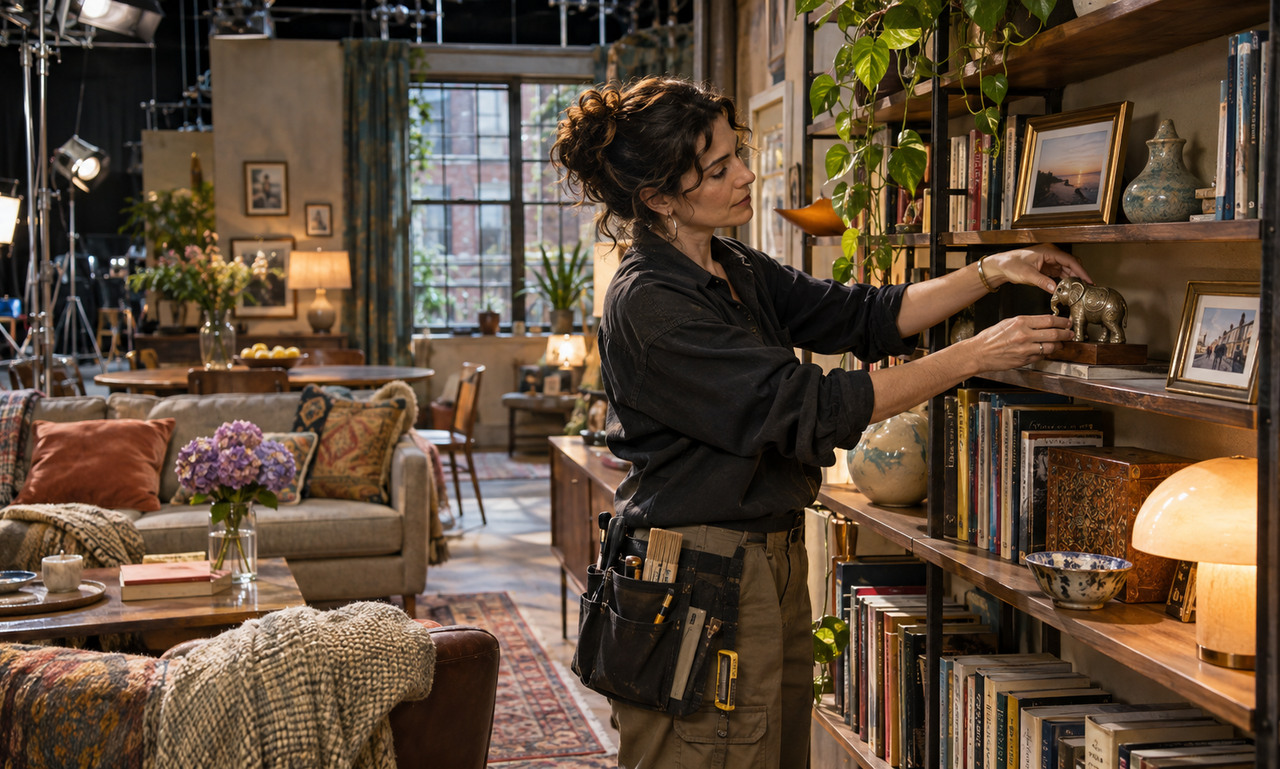
A screen character does not begin at the edge of the frame. The books beside the bed, the chipped cup in the kitchen and the photograph kept half-hidden on a shelf can establish a private life before the story explains any of it.
Set decorators build that evidence from the script, conversations with the director and production designer, and close attention to the character’s circumstances. Their work asks not simply what would look attractive in a room, but what this particular person would have chosen, inherited, neglected or refused to throw away.
Possessions create a personal history
A convincing space usually contains objects from more than one moment in a life. A new sofa may sit beside an old family lamp; a carefully framed award may share a wall with an impulsive postcard. Those contrasts make the room feel accumulated rather than installed.
Class, work, geography and taste all shape the selection. The most useful details are specific without becoming distracting. They reward a close viewer while remaining natural enough that the character appears to live among them without explanation.
Continuity turns detail into storytelling
Objects often move with the action, so decorators work with props, art department crews and continuity teams to preserve their place and condition. A letter opened in one scene, a plant left unwatered or a growing stack of takeaway containers can quietly register the passage of time.
The camera also changes what matters. A small texture may become significant in a close-up, while a wider shot needs strong shapes and color relationships that guide the eye toward the performance.
The room should support the actor
Good decoration gives performers useful behavior. A chair can suggest how someone settles after work, a crowded counter can create a nervous task, and a familiar object can provide an emotional point of contact during a difficult scene.
When the choices are precise, the audience rarely stops to admire the arrangement. The space simply feels true, and that truth gives the character a past that seems to continue beyond the scene.


