How Stage Designers Turn a Concert Into a World
Scale, light, architecture and movement transform a set list into a visual environment the audience can enter for one night.
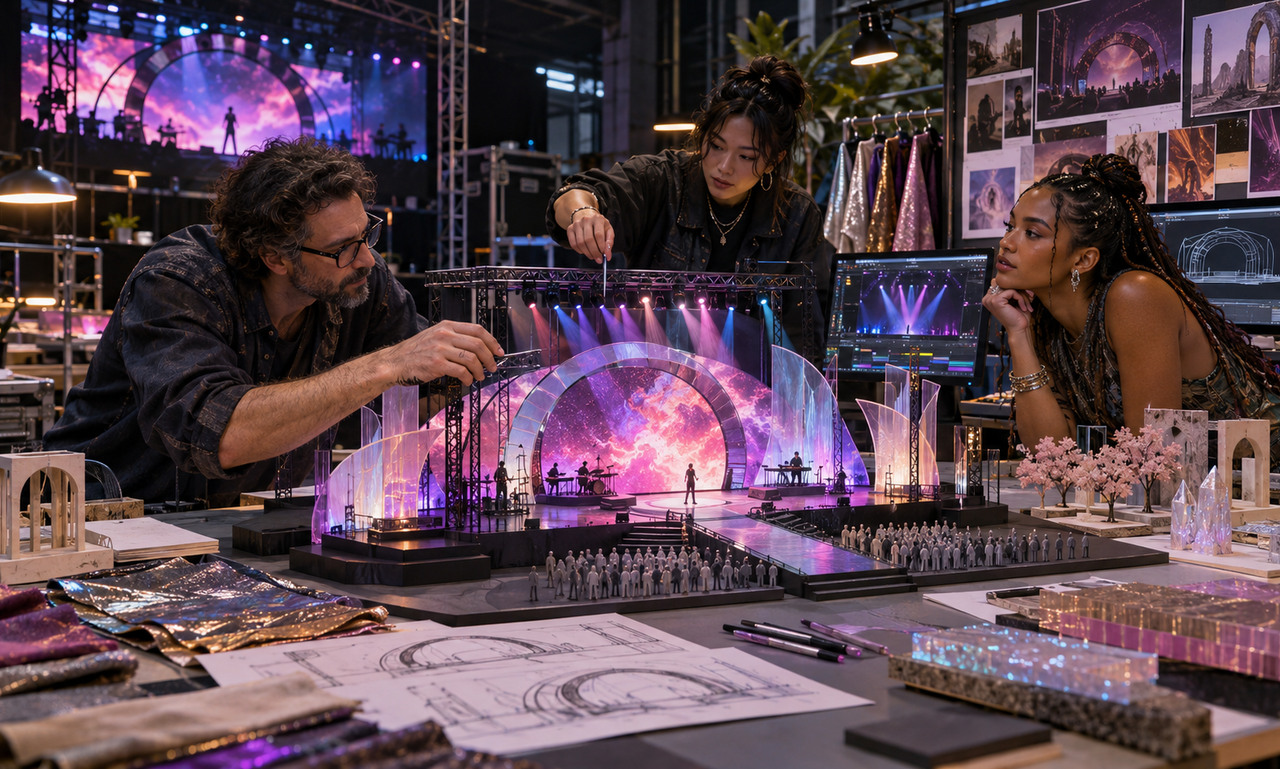
A concert stage has to serve two experiences at once. It frames the performer for thousands of people in a venue, while cameras and screens bring intimate details to viewers far from the front. Stage designers connect those scales inside one visual world.
The process begins with music, movement and the artist’s identity. Architecture is not simply placed behind the songs; it creates the conditions in which each section of the show can change mood and meaning.
The concept becomes a system
Early models and visual studies establish shape, colour and material. A central runway may bring the artist closer to the audience, while platforms, portals or suspended elements can divide the show into distinct chapters.
Every idea is tested against the venue and the tour. The design must load safely, travel efficiently and adapt to buildings with different heights and sightlines. Imagination depends on repeatable engineering.
Light completes the architecture
Lighting changes the same structure from song to song. A surface can disappear into darkness, reflect a field of colour or become a screen for shadow and texture. The physical set is only one half of the design.
Video, choreography and special effects are planned in relation to those transformations. Timing is precise, but the result should still feel responsive to the live performance rather than trapped inside a technical sequence.
The audience needs a point of view
Designers study what the show looks like from the floor, upper seats and broadcast cameras. Scale alone does not guarantee impact. Clear visual focus helps every viewer understand where to look and when the world is changing.
The best stages remain memorable after the equipment is packed away. They give temporary form to the music, creating a place that can exist only while the show is happening.


