How Stage Managers Call a Live Awards Show
Stage managers coordinate performers, cameras, scenery and timing so an awards show can move cleanly through constant live change.
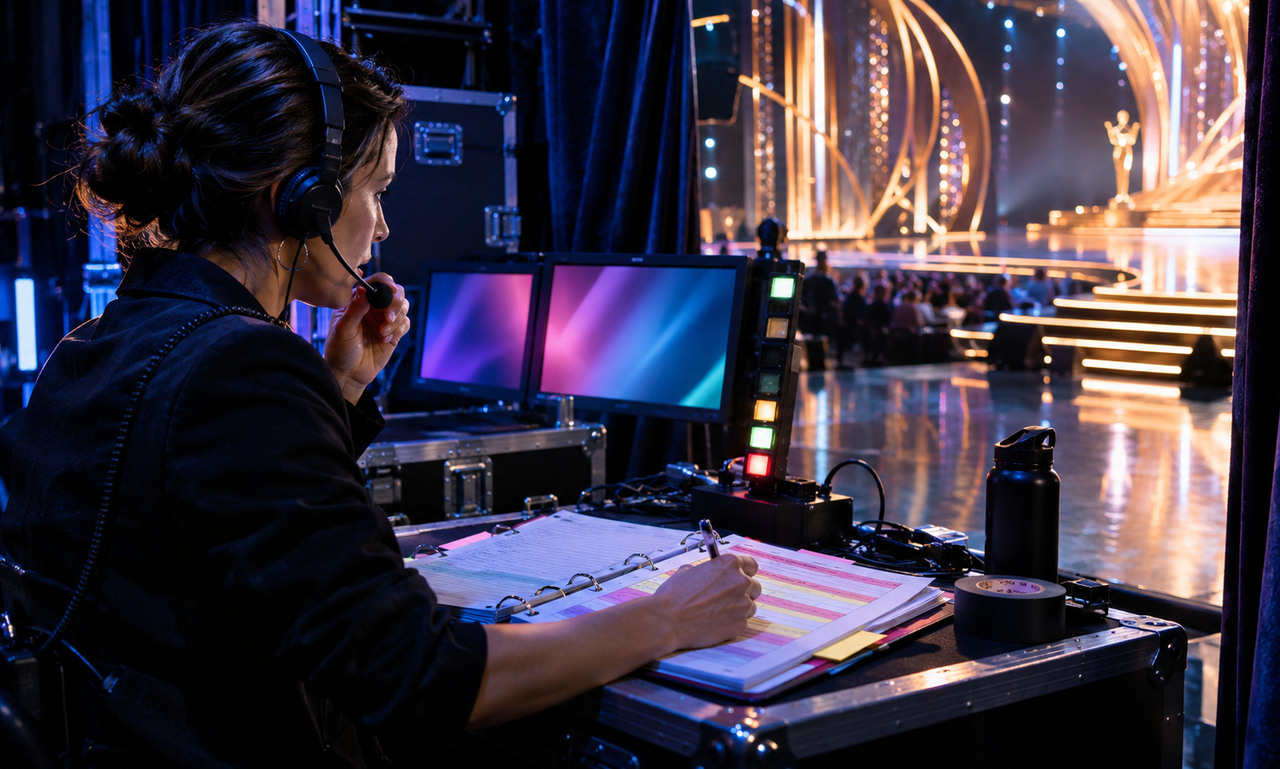
An awards show moves between speeches, performances, video packages and commercial breaks without giving the audience time to see the machinery. Stage managers coordinate that movement from the wings, where every entrance and cue has a practical consequence.
The work begins with the rundown, but a list of segments is only the outline. Each transition has to account for presenters, microphones, scenery, camera positions and the time needed to clear one moment before the next begins.
Rehearsal builds a shared clock
Stage managers walk performers through entrances, marks and exits while confirming that departments use the same sequence. A lighting cue means little if the scenic move or camera turn is not ready to meet it.
They also identify pressure points. A quick wardrobe change, a large music setup or a winner entering from an unexpected seat may need extra staff and a more flexible path.
Clear language keeps the wings calm
During the broadcast, instructions must be short and unmistakable. Headset communication connects the stage manager with the control room, floor teams and departments waiting for their cue.
Performers receive a different kind of guidance. A calm countdown, a direct point toward the entrance and confirmation of where to stand can reduce uncertainty seconds before a live appearance.
The plan has to bend without breaking
Speeches run long, applause changes timing and technical issues can close a route. The stage manager helps redistribute time and movement while protecting the next essential beat.
When the work succeeds, the show feels immediate rather than fragile. The audience sees celebration and surprise; behind the curtain, disciplined coordination keeps every live possibility connected to the next cue.


