How Stunt Coordinators Turn Risk Into Repeatable Performance
Screen action becomes convincing when careful planning, performer training and camera design make every movement controlled and repeatable.
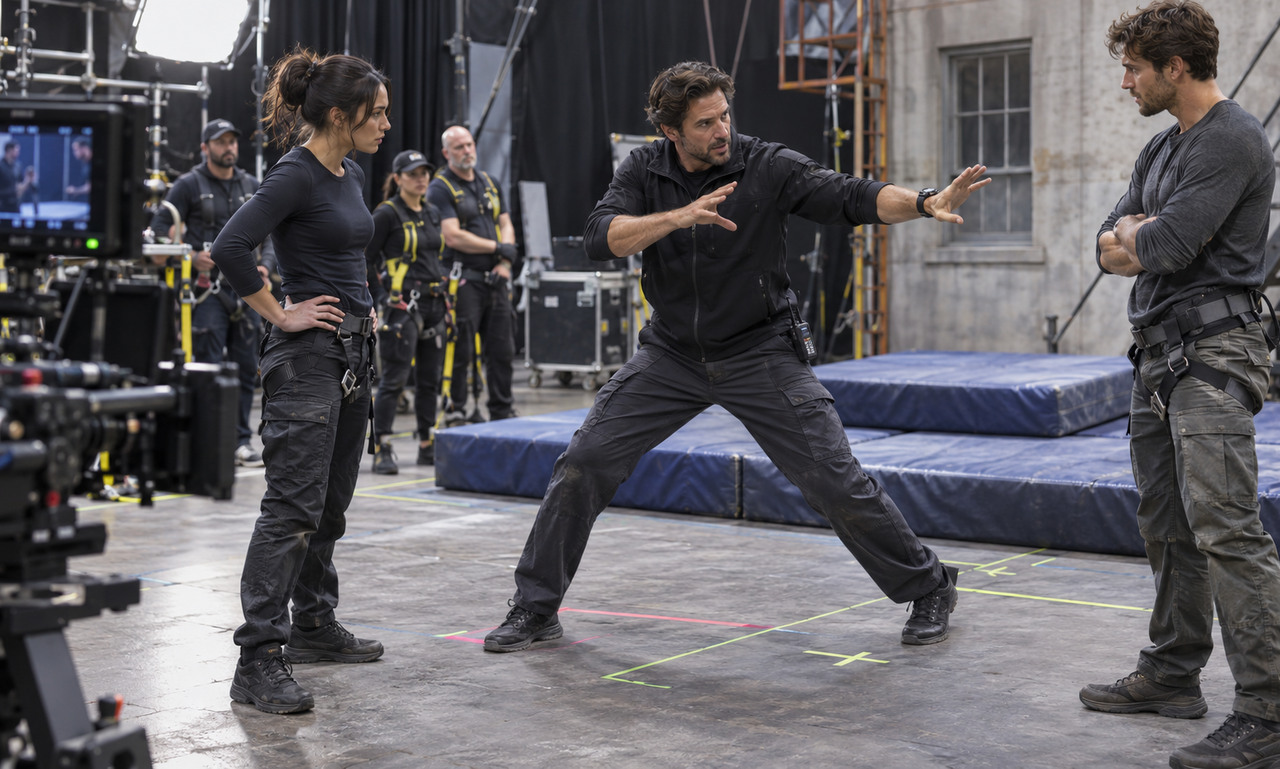
A successful screen stunt looks immediate, but its foundation is repetition. Every fall, turn and reaction is broken into specific actions that performers can understand and the production can reproduce across multiple takes.
The stunt coordinator connects story, safety and camera technique. The goal is not to make a moment dangerous. It is to create the strongest possible impression while controlling the variables behind it.
The sequence begins with the character
Action should reveal who is involved. A trained character moves differently from someone improvising under pressure, and exhaustion or fear changes the rhythm of a scene. Choreography starts with those dramatic facts.
The coordinator works with the director to identify the essential beats. Once the audience’s point of view is clear, the team can decide which actions need a performer, a specialist, a rig or a different camera solution.
Rehearsal turns movement into information
Performers learn the sequence slowly before speed is introduced. Distances, eyelines and contact points are marked, while mats and protective equipment allow the team to test each stage under controlled conditions.
Camera rehearsals are equally important. Lens choice and angle can make a measured movement feel forceful. Precise framing often creates more impact than adding unnecessary physical risk.
Consistency protects everyone
Before each take, the coordinator confirms that positions, equipment and timing remain unchanged. If blocking or coverage shifts, the new version is explained and rehearsed rather than assumed.
The finished scene should feel unpredictable to the audience and dependable to the crew. That contrast is the craft: disciplined preparation creating the illusion of a moment that could happen only once.


