How Vocal Editors Build a Seamless Performance From Many Takes
Vocal editors combine the strongest emotional and technical moments from a session while preserving the sense of one continuous performance.
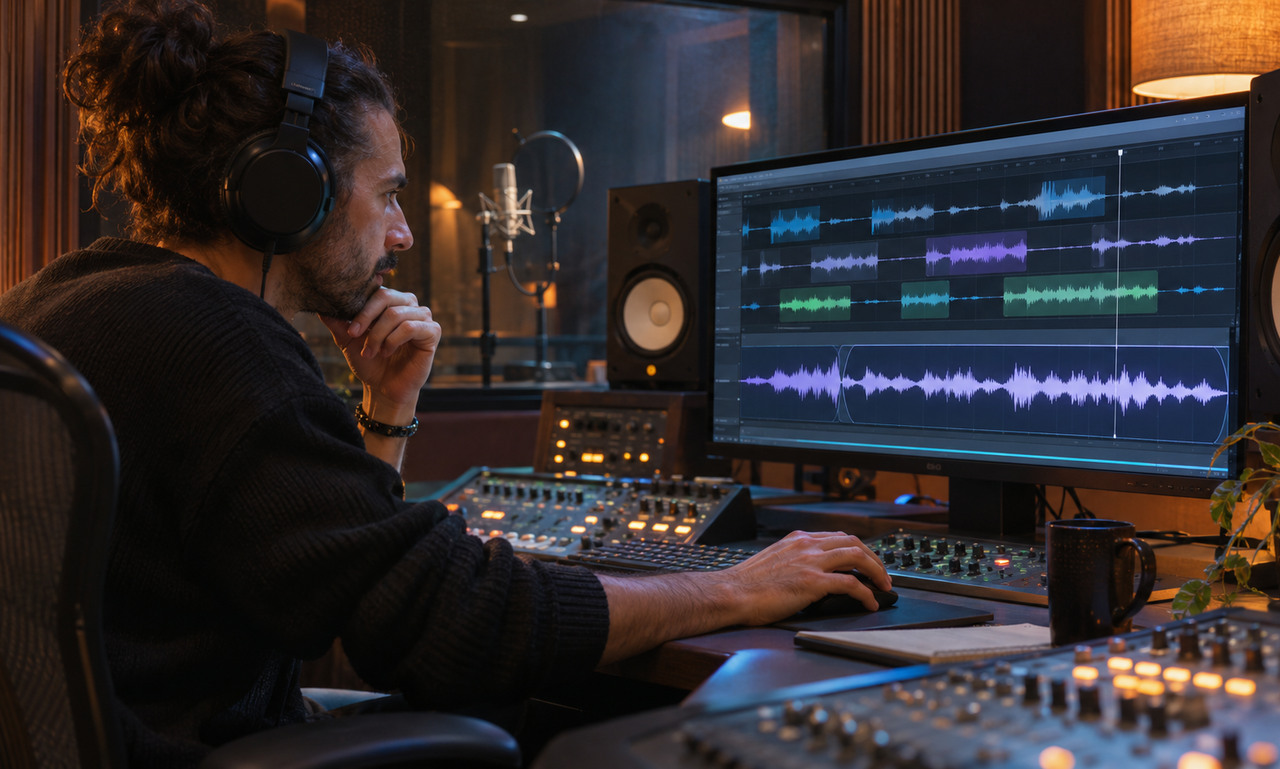
A singer may record several complete performances and many focused passes through difficult lines. Vocal editors shape that material into a final track that carries the strongest emotion and control without sounding assembled piece by piece.
The work begins with listening rather than correcting. Editors mark the phrases that communicate most clearly, noting tone, timing, diction and the way each choice connects to the lines around it.
The best take depends on context
A technically clean phrase is not always the right one. A slight break, breath or rough edge may carry the feeling the song needs, while a perfect note can seem detached from the performance surrounding it.
Editors compare transitions as carefully as individual lines. The voice must move naturally through changes in intensity, register and distance from the microphone.
Invisible joins require musical judgment
Comped phrases are aligned at points where breath and consonants can connect convincingly. Room sound, headphone spill and changes in vocal tone must remain consistent enough that the listener never hears the seam.
Timing and pitch refinement are applied with the same restraint. The goal is to support intention, not remove every movement that makes the singer recognizable.
The final vocal keeps a human arc
A song should develop from beginning to end. Editors protect that progression, allowing early restraint, later expansion and the small variations that make repeated choruses feel emotionally different.
When the work is finished, the editing disappears. What remains is a performance that feels immediate and whole, even though its strongest moments may have arrived at different times during the session.


