How Wig Designers Shape a Character Before the Close-Up
A carefully designed wig can establish period, status, routine and personality while remaining convincing under the closest camera.
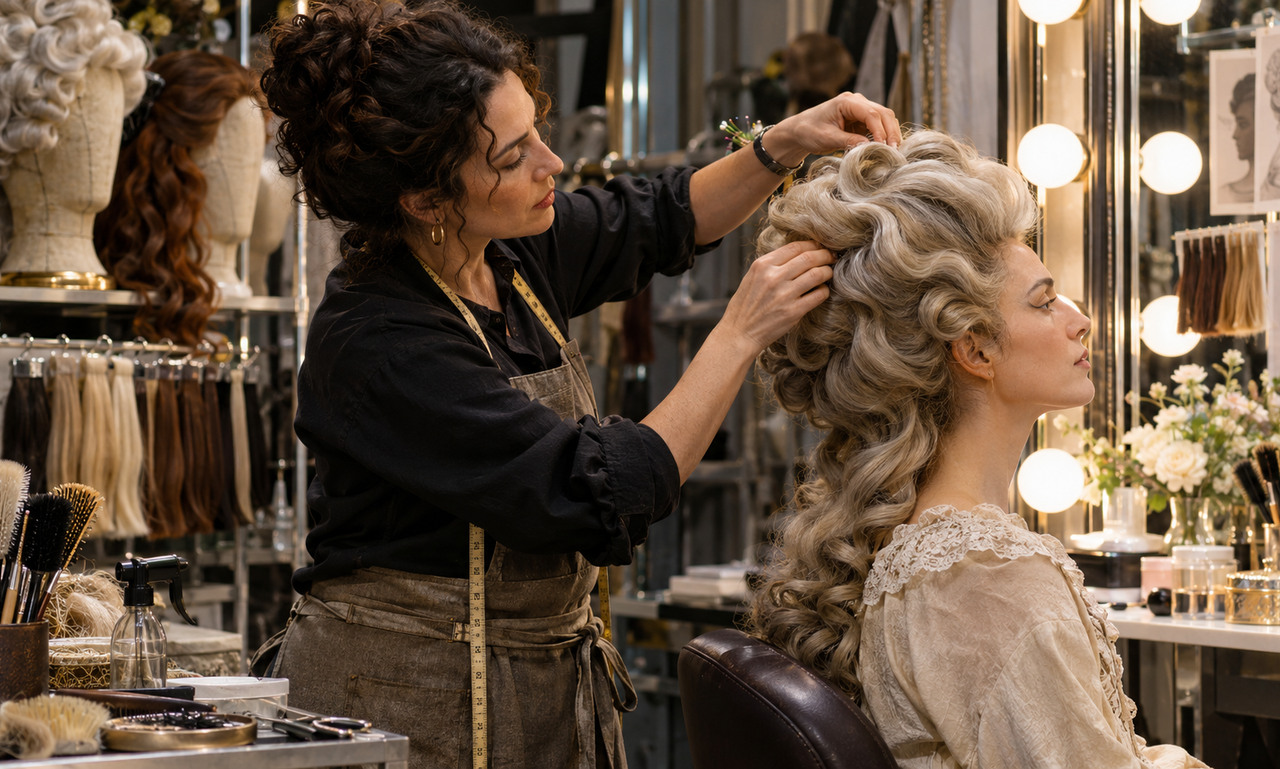
Hair changes the outline of a face before an audience has time to study costume or dialogue. A wig can place a character in a period, suggest careful routine or reveal someone whose appearance is beginning to fall apart. The design has to communicate all of that while still looking like real hair.
Wig designers begin with the script, visual references and the performer’s features. They consider silhouette, color, density and hairline, then build a plan that supports both the character and the practical demands of filming.
The foundation determines believability
A custom base follows the shape of the head and allows the wig to sit securely without unnecessary bulk. Fine lace at the hairline helps individual hairs appear to emerge naturally from the skin.
Color is rarely one flat shade. Blended tones, rooted sections and carefully placed variation create dimension under changing light and prevent the hair from reading as a single artificial surface.
Styling follows the character’s habits
A hairstyle should show how the character lives. Precision may suggest daily effort and access to professional care, while uneven pins, grown-out color or repeated wear can reveal pressure and limited time.
Period work requires research without becoming a costume display. Designers adapt historical shapes to the performer and the camera so the result feels inhabited rather than presented.
Continuity keeps the transformation stable
Wigs must survive movement, weather and multiple takes. Detailed photographs and notes record placement, texture and the intentional strands that have shifted during a scene.
When the work is complete, the audience sees the character rather than the construction. The hairline holds in close-up, the silhouette supports the performance and the design appears to have grown from the life on screen.


