Practical Effects Keep Screen Worlds Physical
Miniatures, weather rigs and breakaway props give actors and cameras something real to respond to.
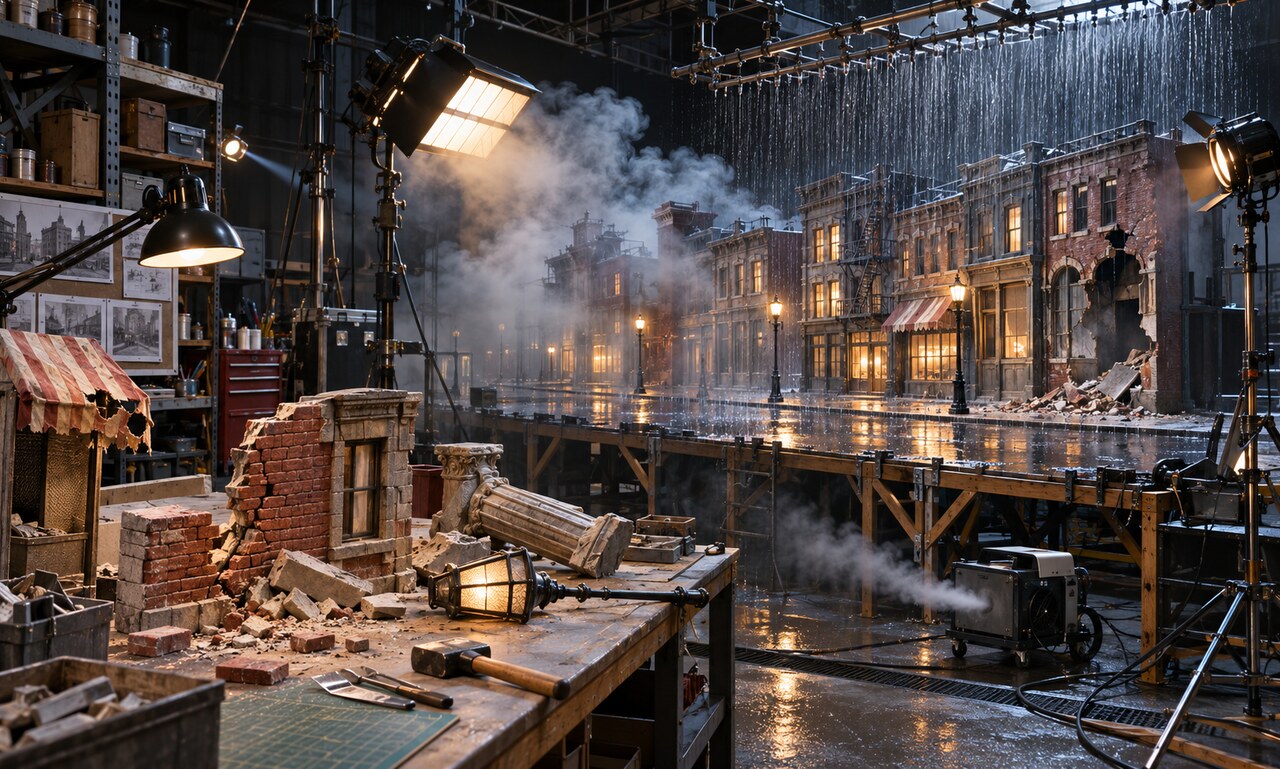
A practical effect happens in the physical space of production. Rain falls on the set. A miniature building catches light. A breakaway object collapses on cue. These effects give performers, lenses and lighting something tangible to encounter.
The appeal is not based on rejecting digital tools. Modern productions often combine practical and digital methods. The strongest choice is the one that gives a scene weight while protecting performers and crew.
Physical interaction creates detail
Real materials respond in complex ways. Water catches light unpredictably. Smoke moves around actors and scenery. Dust settles on clothing. These small interactions help a scene feel connected because every element occupies the same environment.
Actors also gain clear information. They can react to temperature, texture, resistance and movement rather than imagining every condition.
Miniatures turn scale into craft
A well-built miniature is designed for the camera, not for display alone. Surface detail, lens choice, frame rate and lighting work together to make a small object feel large. The model must carry enough imperfection to suggest real construction and use.
Miniatures can depict environments that would be impossible or unsafe to build at full size. They give filmmakers control while retaining the behaviour of real light and material.
Invisible work creates believable spectacle
Practical effects teams plan timing, safety and repeatability. An effect may need to work several times from different camera positions. Each reset becomes part of the production schedule.
When the result succeeds, viewers may never ask how it was achieved. They simply believe that something happened in front of them. That sense of physical presence remains one of cinema’s most persuasive illusions.


