The Art of Styling One Look for Multiple Cameras
A major appearance must work in motion, in close-up and across unpredictable lighting conditions.
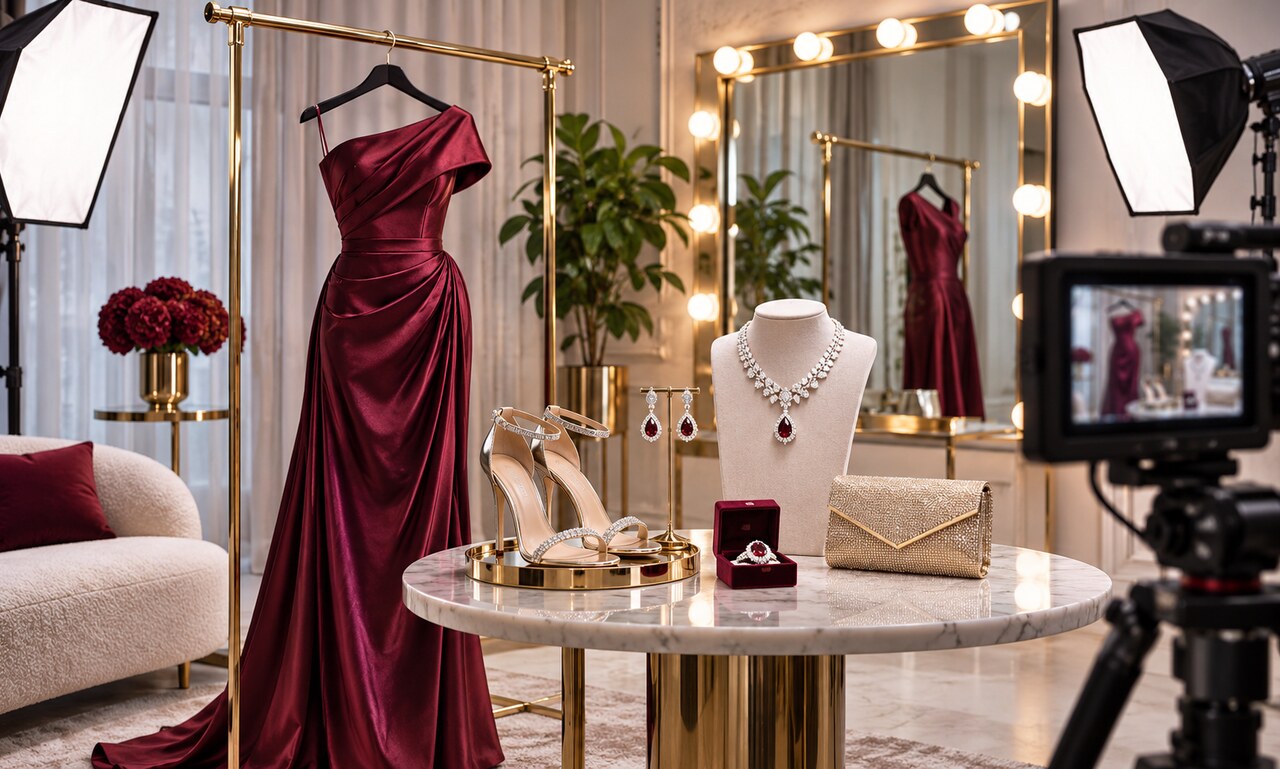
A look created for a major appearance will rarely be seen in only one way. It may be photographed on arrival, filmed during an interview, cropped into vertical video and examined in close-up. Styling has to anticipate all of those frames.
The challenge is not to make every angle identical. It is to ensure that the central idea remains clear as the camera distance and lighting change.
Silhouette works at a distance
Wide shots reduce detail, making shape and proportion more important. A strong shoulder, clear waist or distinctive hem can keep the outfit recognizable even when jewellery and texture disappear.
Movement matters too. Garments must sit well when standing, walking and seated. A look that works only in a posed photograph may become distracting during a longer appearance.
Close-ups reward careful detail
Interview cameras bring attention to neckline, fabric texture, jewellery and grooming. Accessories that seem subtle in person can become dominant on screen. Stylists test balance before the event rather than relying on the mirror alone.
Colour can also shift under different lights. Camera tests reveal whether materials reflect too strongly, lose dimension or create unwanted patterns.
Consistency creates a complete image
The outfit, hair, makeup and accessories should support the same visual direction. This does not require perfect matching. Contrast can make the look more memorable when it feels intentional.
Successful appearance styling survives the unpredictability of real coverage. It gives every camera a different view of the same confident idea.


