Tailoring Is the Invisible Architecture of Fashion
Structure, balance and precise adjustment determine how a garment communicates before colour or decoration enters the picture.
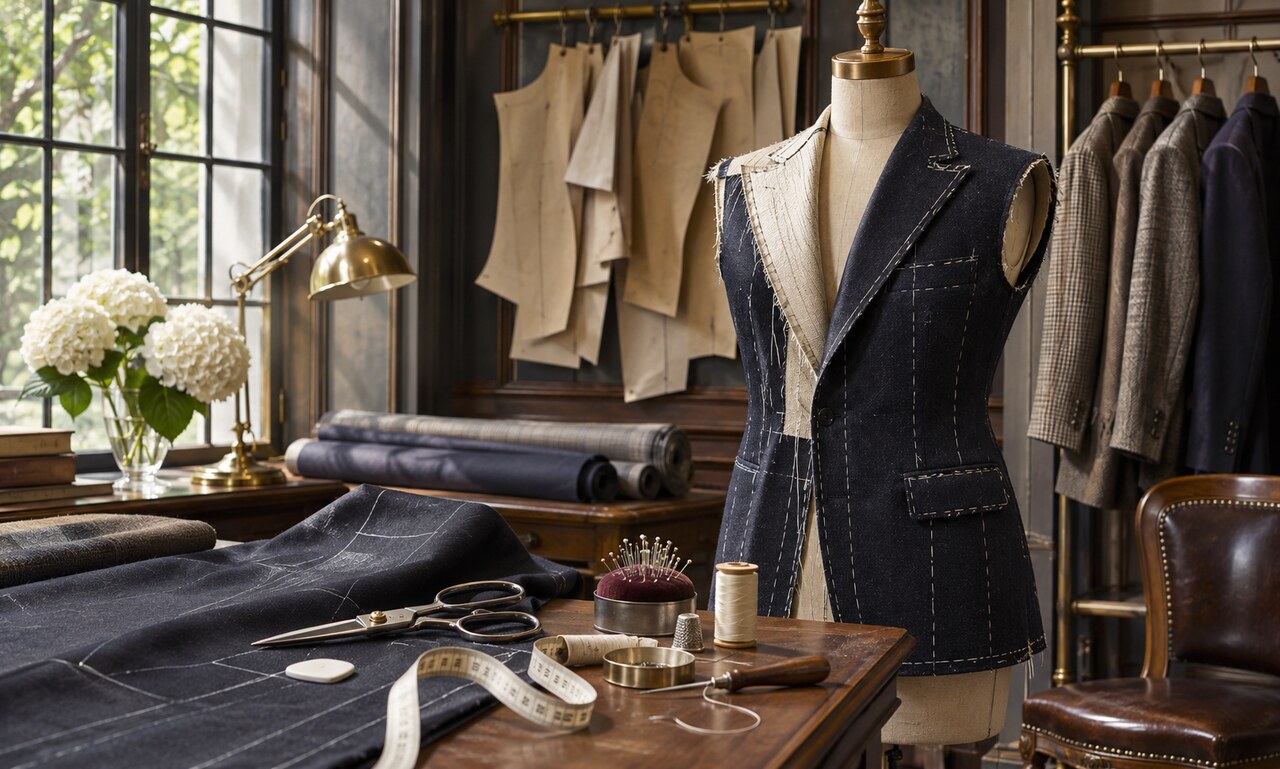
A tailored garment can appear simple because its complexity is hidden inside. Canvas, padding, seam placement and careful pressing give cloth a structure that the wearer experiences as balance and ease.
Tailoring is often associated with formal jackets, but its principles reach much further. Any garment benefits from understanding proportion, movement and the relationship between fabric and body.
Fit is more than size
Two people with similar measurements may need different adjustments. Posture, shoulder angle and the way someone moves all affect how a garment hangs. A tailor reads these differences and redistributes fabric rather than simply making it tighter or looser.
Good fit allows the eye to follow clean lines. Pulling, twisting and collapse reveal where balance has been lost.
Structure creates expression
A strong shoulder can communicate authority. A softened construction can feel relaxed and modern. The placement of a waistline changes the apparent proportion of the body. These choices form a visual language before pattern or colour is considered.
Fabric also sets limits. Heavy wool can hold shape that a fluid silk cannot. The craft lies in working with the material rather than forcing every textile toward the same result.
Alteration extends the life of clothing
Bodies and needs change. A well-made garment can often be adjusted instead of replaced. Letting out a seam, refining a sleeve or changing a hem allows clothing to continue serving the wearer.
Tailoring is invisible when it works, but its effect is immediate. It turns a piece of fabric into a form that moves with confidence and purpose.


