Why a Close-Up Can Change a Performance
When the camera moves close, a breath, hesitation or glance can carry the weight of an entire scene.
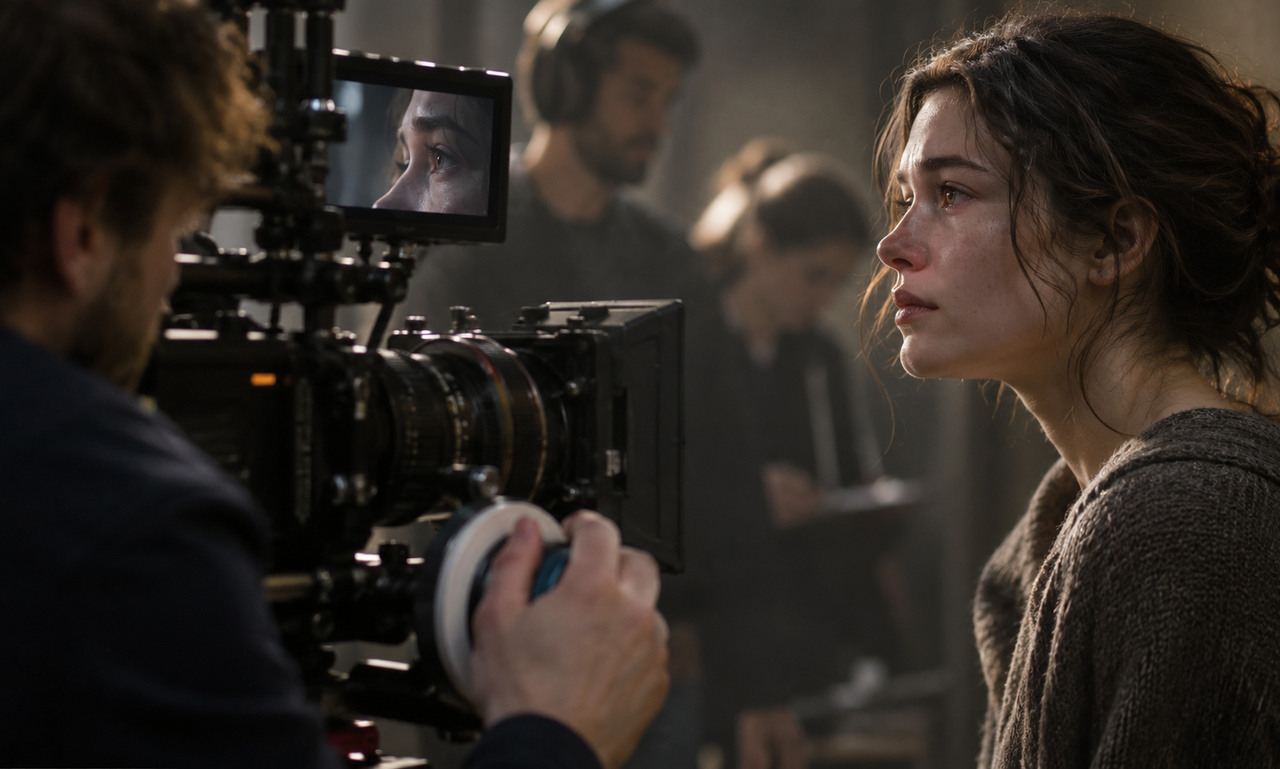
A close-up changes the scale of acting. On a wide stage, emotion may travel through posture and voice. On screen, a slight shift in focus or tension around the mouth can become the main event.
The shot creates intimacy, but it also creates pressure. The audience can study a face while the character may be trying to hide what it feels.
Thought becomes visible
Screen actors often describe the importance of listening. In a close-up, the response to another person can matter more than the spoken line. The camera records the instant a thought arrives, changes or is pushed away.
This does not require a blank performance. It requires precise internal activity. The expression may remain controlled while the viewer senses movement beneath it.
The lens shapes distance
Not all close-ups feel the same. Lens choice and camera position affect the face and the surrounding space. A close camera can feel immediate, while a longer lens can observe from farther away and create a different kind of privacy.
Lighting, focus and framing decide which details the audience notices. A shallow focus may isolate the eyes. A shadow can hide part of an expression and make uncertainty more powerful.
Context gives the image meaning
A close-up earns its force from the shots around it. After a distant view, moving close can reveal connection or danger. Holding back a close-up until a turning point makes the change in scale feel significant.
The shot is not powerful simply because the face is large. It is powerful because performance, camera and story meet at the same distance, allowing the smallest human detail to fill the screen.


