Why Accessories Give Personal Style Its Signature
A bag, belt, pair of glasses or piece of jewelry can turn good clothes into a recognizable point of view.
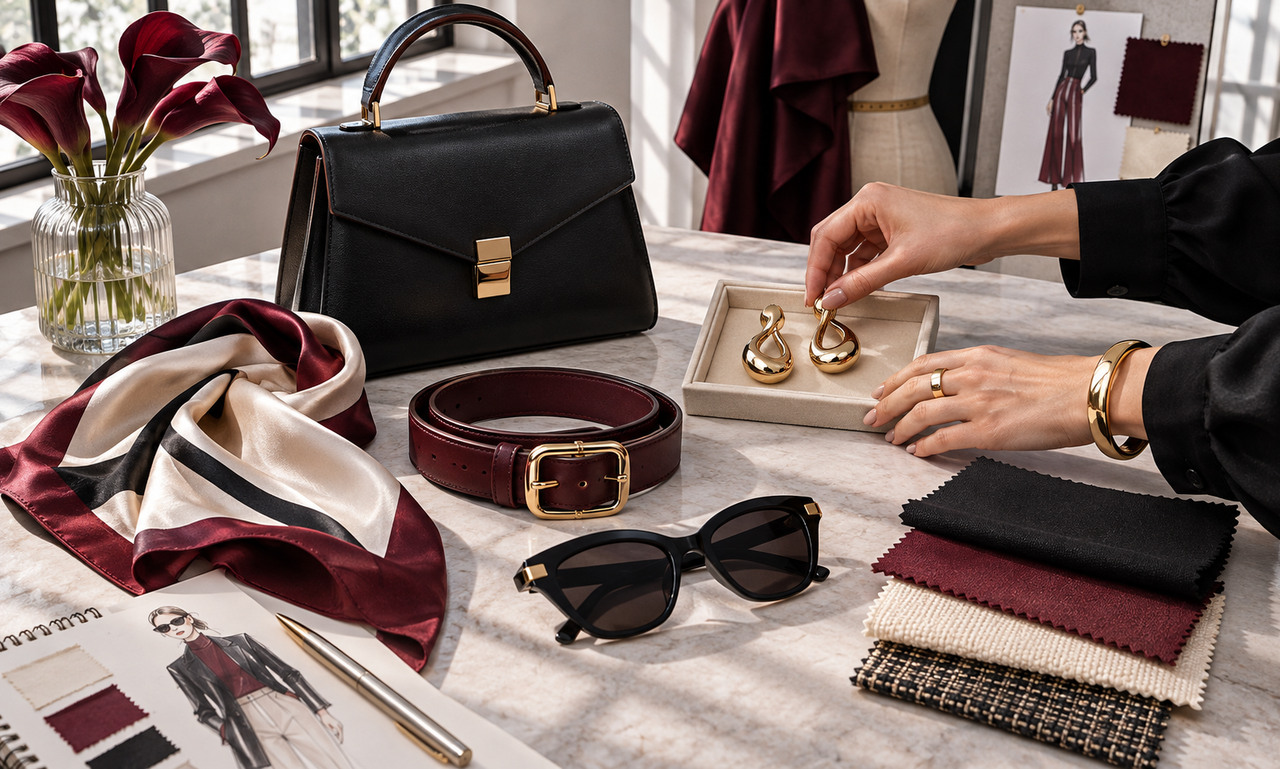
Clothing establishes the outline of a look, but accessories often reveal its personality. A precise watch can sharpen relaxed tailoring. A worn leather bag can soften a polished coat. Jewelry can add movement, memory or a flash of humor.
These objects sit close to the body and often stay in rotation longer than seasonal clothes. Over time, they become connected to the person wearing them.
Small objects carry strong signals
Accessories affect proportion and focus. A wide belt changes the shape of a coat. Large earrings pull attention toward the face. Shoes can make the same trousers feel formal, practical or rebellious. Because the pieces are small, each choice can appear more deliberate.
Texture plays a role too. Polished metal, soft suede, glossy acetate and handwoven fabric catch light in different ways. Mixing them gives a simple outfit depth without adding more layers.
Repetition creates recognition
Personal style often becomes clear through repeated details. Some public figures return to tinted glasses, stacked rings, silk scarves or a particular shape of bag. The item may change, but the idea remains consistent.
This repetition is not a lack of imagination. It is a visual vocabulary. Just as a musician can revisit a sound without repeating a song, a dresser can return to a familiar accent while creating new combinations.
The best choices feel lived in
An accessory gains character through use. Leather develops a patina. Metal picks up fine marks. A scarf becomes associated with different places and occasions. These signs of life can make an object more compelling than a perfect new replacement.
Accessories are most memorable when they serve the person rather than overwhelm the outfit. They bring scale, contrast and history to what is worn. In that final layer, clothes become a point of view.


