Why Physical Album Editions Still Shape an Artist’s Era
A physical edition turns an album’s sound and visual identity into an object listeners can unfold, collect and revisit.
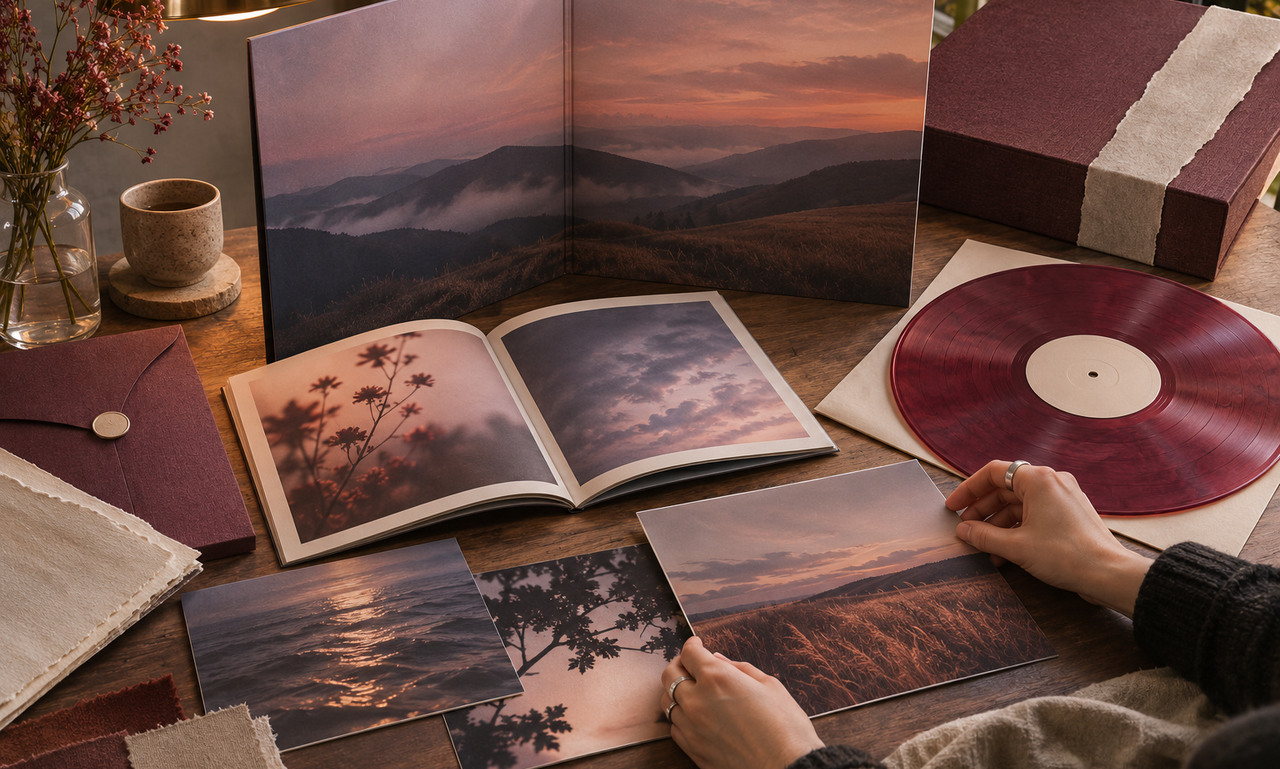
Streaming makes an album immediately available, but a physical edition asks the listener to encounter it as an object. The cover has scale, the sequence has sides and the visual world unfolds through materials that can be held rather than scrolled past.
That experience begins with the album’s central idea. Designers translate its sound and imagery into a system that can move across a sleeve, booklet, labels, inserts and packaging without losing coherence.
Format changes how the story opens
A gatefold creates a reveal, while a compact booklet invites a slower sequence of images and credits. The physical structure determines when information appears and how the listener moves through it.
Material choices add another voice. Uncoated paper can feel intimate, a high-gloss finish can heighten polish and colored vinyl can extend the palette without needing additional explanation.
Details reward close attention
Lyrics, production notes and photographs give listeners access to the people and decisions behind the record. Their typography and placement can make dense information feel like part of the art rather than an appendix.
Special editions may add alternate imagery or archival material, but the strongest extras deepen the album’s meaning. Scarcity alone cannot replace a clear relationship to the music.
The object can outlast the campaign
A physical copy remains visible in a room after release-day promotion has ended. Its spine joins a collection, its cover becomes a memory and the act of playing it can turn listening into a deliberate ritual.
That durability helps define an artist’s era. The edition gathers sound, image and credit into one lasting form, preserving not only the album but the way it wanted to be seen.


