Why Stage Fashion Has to Work in Motion
A performance look must communicate at a distance, survive movement and remain part of the show.
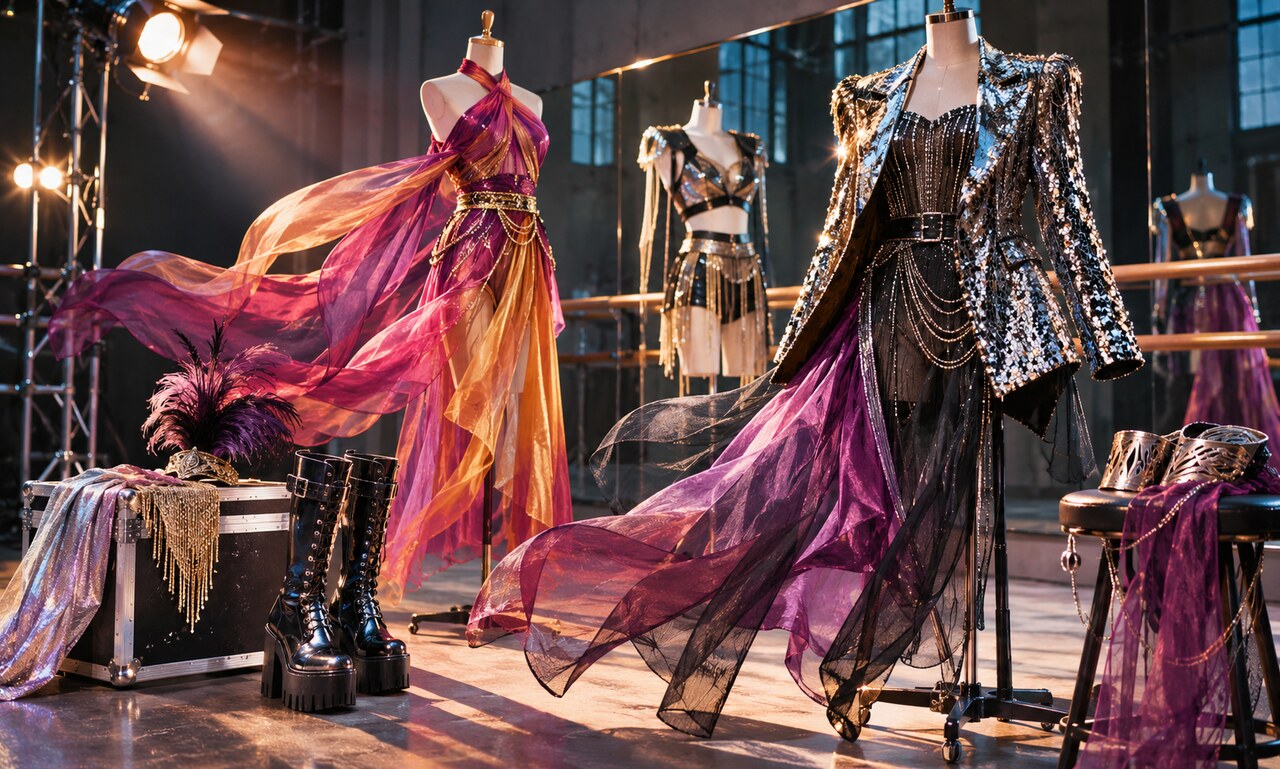
A stage outfit is never seen from one fixed angle. It moves through choreography, lighting changes, camera close-ups and the distant view from the back of a venue. The design must remain expressive through all of them.
This makes performance fashion a practical art. A look can be visually ambitious, but it must also support breathing, movement and rapid changes. The performer needs to trust the clothing enough to stop thinking about it.
Silhouette has to reach the room
Details that appear dramatic in a photograph may disappear on a large stage. Strong shapes, reflective surfaces and clear colour relationships help a costume read from a distance. Lighting tests show which materials glow, flatten or change colour under performance conditions.
Movement can become part of the silhouette. Fringe extends a turn. A coat creates a line behind the body. Flowing fabric makes air visible. These effects allow clothing to participate in choreography.
Construction protects the performance
Stage garments often need hidden reinforcement, secure closures and flexible sections. Footwear must balance appearance with stability. Accessories need to remain in place without limiting the performer.
Wardrobe teams prepare duplicates and repair kits because live performance leaves little room for delay. A loose seam or broken fastening must be solved quickly and quietly.
The look belongs to the larger visual story
Costumes work alongside scenery, video, lighting and dancers. A colour that dominates one song may disappear in the next. Designers consider how the wardrobe develops through the set so the show has its own visual rhythm.
The most successful stage fashion looks effortless because the difficult decisions remain invisible. It gives the performer a stronger presence while moving as naturally as the music itself.


