Why Texture Matters More Than Logos on Camera
Fabric, surface and movement can create visual richness without relying on visible branding.
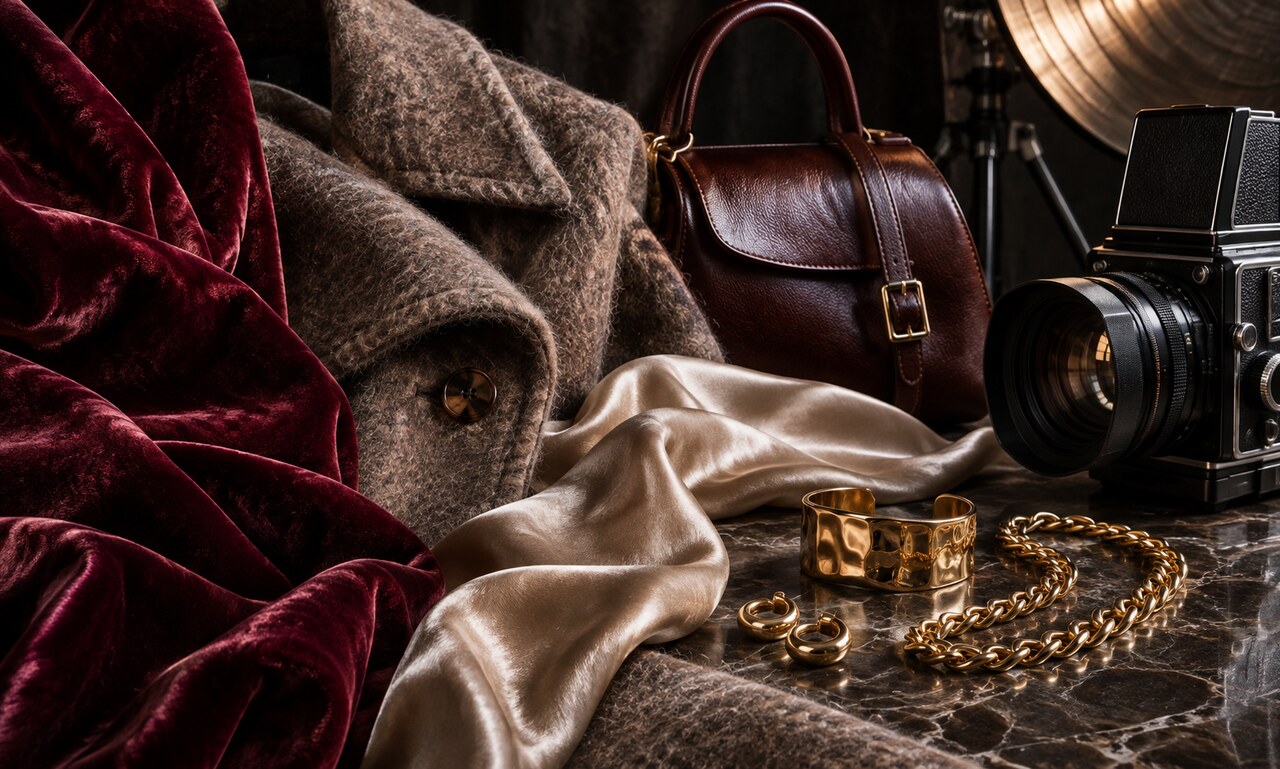
A camera simplifies what it sees. Fine colour differences can flatten, and small details may disappear. Texture survives in another way. It catches light, creates shadow and changes as the wearer moves.
This makes material choice one of the strongest tools in screen styling. A look can feel luxurious, rugged or restrained without displaying a single recognizable mark.
Light reveals the surface
Velvet absorbs light and creates deep shifts in tone. Silk reflects it with movement. Brushed wool appears soft and dimensional, while leather produces firmer highlights. Each material responds differently to the same lighting setup.
Stylists consider these reactions before combining pieces. Too many reflective surfaces can compete. A matte layer can give a brighter element the contrast it needs.
Texture works across colour
A monochrome outfit can remain visually complex when the materials are varied. Similar shades of knit, tailoring and metal create depth without breaking the colour story.
This approach is especially effective in close-up, where surface detail becomes part of the portrait. It rewards attention without making the clothing feel like an advertisement.
Movement completes the material
Texture is not only visible; it changes through motion. Fringe, pleats and fluid fabric create rhythm. Structured materials hold their line and give the body a clearer shape.
On camera, material can communicate more quietly and lastingly than a logo. It gives the image something to discover as light, angle and movement evolve.


