What Really Happens Backstage Before the Curtain Rises
The final minutes before a live performance are a careful choreography of checks, cues, concentration and controlled nerves.
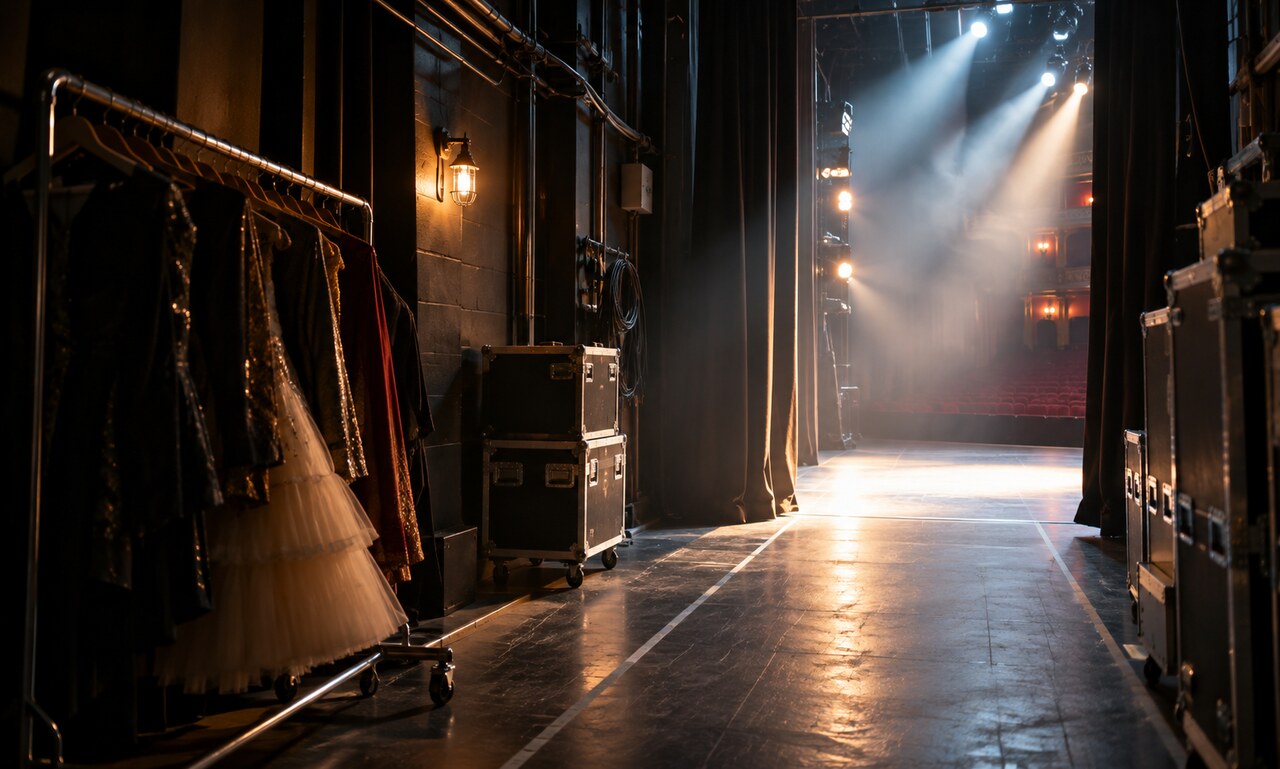
To an audience, a performance begins when the lights change. Backstage, it has been underway for hours. The final minutes before curtain are the last movement in a much longer process involving performers, stage managers, technicians, wardrobe teams and crew members.
The atmosphere can appear calm, but it is full of information. Headsets carry cues. Hands check props and fasten costumes. Someone confirms that a microphone is live. Every person is listening for the moment when preparation becomes action.
The stage manager holds the map
The stage manager coordinates the performance as it unfolds. Lighting, sound, scenery and entrances must happen in the correct order, often within seconds of one another. A cue may be triggered by a line, a movement or a beat in the music.
This role depends on consistency. Performers may bring fresh energy to each night, but the structure around them must remain reliable. That stability creates the conditions for spontaneity without allowing the production to lose control.
Small checks prevent large problems
Before the curtain rises, crew members repeat tasks that may already have been completed. Props return to marked positions. Costume closures are tested. Batteries and cables are checked. The repetition is intentional because a missed detail can travel quickly through a live performance.
Wardrobe teams prepare for changes that may last only moments. Technicians monitor systems the audience will never see. These jobs are most successful when they disappear into the smoothness of the show.
Performers find their own focus
There is no single backstage ritual. Some performers need silence. Others move, stretch, speak through lines or gather with the company. The purpose is the same: to shift from ordinary conversation into the emotional and physical world of the performance.
Nerves do not necessarily vanish with experience. They can become a source of attention, sharpening the senses before an entrance. The familiar call to places gives that energy a direction.
The invisible work enters the light
When the first cue arrives, the audience sees only the stage. Yet every entrance carries the work of people standing just beyond it. A live performance feels immediate because so much preparation has made immediacy possible.
The curtain rises once. Backstage, however, the show has already begun.